
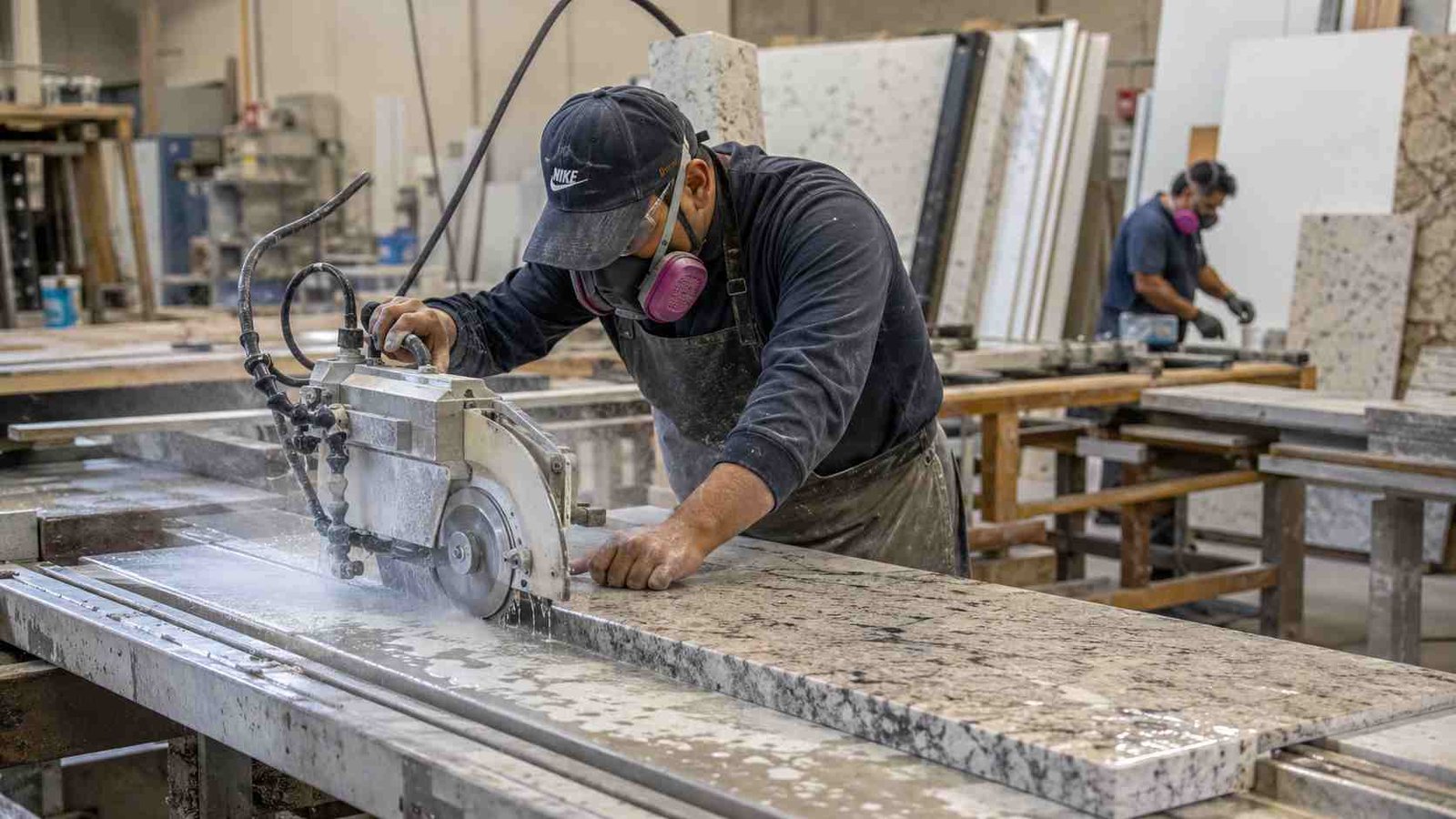
Engineered quartz is a favorite material for modern kitchens. But creating these beautiful surfaces hides a dark secret. The rise of California quartz countertop silicosis cases has alarmed public health officials across the state. Workers who cut, grind, and polish artificial stone are breathing in dangerous amounts of silica dust. This exposure leads to severe and incurable lung damage. If you work in the stone industry or plan to remodel your kitchen, you need to understand the facts behind this growing health crisis.
California quartz countertop silicosis is a severe occupational lung disease affecting workers who fabricate engineered stone. This artificial stone contains very high levels of crystalline silica. When workers cut the stone dry, it releases microscopic dust. Breathing this dust causes irreversible lung scarring.
Key Takeaways
-
Engineered stone contains up to 93% silica, much higher than natural granite or marble.
-
Silicosis is a progressive disease with no known cure.
-
The primary risk is to workers who cut and polish the stone, not homeowners.
-
Early symptoms include a persistent cough and shortness of breath during exercise.
-
California implemented strict emergency rules banning the dry cutting of engineered stone.
-
Proper safety gear, like water-fed tools and specialized respirators, can prevent exposure.
What Causes Silicosis From Engineered Stone?
Silica is a natural mineral found in sand, rock, and quartz. Natural stones like granite contain about 10% to 45% silica. However, engineered stone is a manufactured product made of crushed quartz bound together with resin. This artificial material can contain over 90% silica.
When a worker uses a saw or grinder on engineered stone, it creates fine, airborne dust. This is known as respirable crystalline silica. The particles are so small you cannot see them. When breathed in, they travel deep into the lungs. The body cannot clear these sharp particles out. Over time, the lungs become inflamed and develop thick scar tissue. This scarring makes it incredibly hard to breathe.
Who Is Actually At Risk?
We see a lot of confusion regarding who is in danger. Many homeowners worry about their kitchen counters making them sick. Let us clarify the real risks.
| Group | Exposure Level | Primary Risk Factor | Overall Risk of Silicosis |
| Fabricators / Workers | High | Cutting, grinding, and sweeping engineered stone dust. | Very High |
| Installers | Medium | Minor adjustments or drilling on-site during installation. | Moderate |
| Homeowners | None | Using a fully installed, finished countertop for cooking. | Zero |
A Common Mistake
Many people believe that having a quartz countertop in their home will release toxic dust into their food or air. This is a common misunderstanding. The stone is completely safe once it is manufactured and installed. The danger only exists when the stone is physically cut, crushed, or ground down.
Early Symptoms of Quartz Silicosis
Silicosis is a tricky disease. A worker might feel completely fine for months or even years while the lung damage silently builds up. Engineered stone silicosis tends to progress much faster than traditional silicosis seen in coal miners.
Watch for these early warning signs:
-
A nagging, dry cough that does not go away.
-
Shortness of breath, especially when climbing stairs or lifting heavy objects.
-
General fatigue and weakness.
-
Chest pain or tightness.
If a worker experiences these symptoms, they need to see a doctor who specializes in occupational lung diseases immediately.
How California is Fighting the Outbreak
Because of a sharp spike in young workers getting sick, state regulators took fast action. Cal/OSHA created new emergency rules to protect workers from silica dust.
Employers in California must now follow strict safety guidelines. They can no longer allow workers to cut engineered stone dry. The state heavily monitors stone fabrication shops to ensure they comply with these life-saving rules. For official guidelines on workplace safety, you can review resources from the California Department of Public Health.
4 Mandatory Safety Steps for Workers
If you manage a stone shop or work with quartz, you must prioritize safety. Here is a step-by-step process to reduce silica exposure.
-
Always Use Water: Use water-integrated tools. Wet cutting keeps the dangerous dust from floating into the air.
-
Wear the Right Respirator: A simple surgical mask or cloth mask will not stop silica dust. Workers must wear NIOSH-approved respirators designed for fine particles.
-
Improve Shop Ventilation: Install heavy-duty exhaust systems to pull contaminated air away from the workers’ breathing zones.
-
Clean Up Safely: Never dry sweep the shop floor. Dry sweeping throws settled dust back into the air. Use wet mopping or vacuums with HEPA filters.
These steps are not just suggestions. They are legal requirements in California designed to keep workers alive.
Conclusion
The rise of California quartz countertop silicosis is a serious health emergency for stone workers. The high silica content in engineered stone makes it incredibly dangerous to cut without proper precautions. While homeowners can safely enjoy their finished kitchens, the workers building those kitchens need strong protections.
Next Steps:
-
If you work with engineered stone, ensure your shop uses wet-cutting methods and provides proper respirators.
-
If you have a persistent cough and work in construction, schedule a medical exam and mention your silica exposure.
-
If you are a homeowner planning a remodel, ask your contractor about their shop’s safety practices to ensure you are supporting an ethical business.
Frequently Asked Questions
Is engineered quartz banned in California?
No, engineered quartz is not banned in California. However, the state has banned the unsafe dry cutting of the material to protect workers from dust.
Can you cure silicosis?
No, there is no cure for silicosis. The lung scarring is permanent. Treatment focuses on managing symptoms and slowing down the disease. In severe cases, a lung transplant is the only option.
Are granite countertops safer to cut than quartz?
Yes, natural granite has significantly less silica than engineered quartz. However, cutting granite still produces silica dust and requires the same safety gear and wet-cutting methods.
How fast can quartz silicosis develop?
Because engineered stone has such high silica levels, workers can develop acute or accelerated silicosis in just a few years of heavy exposure.
How do I clean silica dust off my clothes?
Workers should never use compressed air to blow dust off their clothes. Employers should provide changing rooms, and work clothes should be washed separately from household laundry to avoid spreading the dust.