USPS Mail Blackout 2026: Why Your Mail Stopped and How to Fix It
If you walked to your mailbox today, February 16, 2026, you likely found it empty. You aren’t alone. Over 165 million addresses across the United States are currently experiencing a scheduled USPS mail blackout.
While most people assume a “blackout” just means a federal holiday, the reality for 2026 is far more complex. Beyond the standard holiday closures, we are currently navigating a “triple threat” of service disruptions: the annual holiday calendar, strict legal restrictions on Congressional mail during this primary election year, and new international service suspensions.
Whether you are a small business owner waiting on a check, a campaign manager navigating the 2026 midterms, or just someone wondering where your package is, understanding these three blackout categories is essential. This guide breaks down exactly why the mail stops and how the Delivering for America plan has changed the rules for getting it moving again.
Is Today a USPS Mail Blackout? (2026 Holiday Schedule)
The short answer is yes. Today, Monday, February 16, is Presidents’ Day (Washington’s Birthday). This is a federal holiday, meaning the United States Postal Service (USPS) has suspended regular mail delivery and retail operations.
However, “closed” doesn’t mean “completely stopped.” The postal network operates on a tiered system, and while your local letter carrier is off, the backbone of the logistics network is still moving.
Presidents’ Day & Priority Mail Express Exceptions
If you absolutely need something delivered today, you have exactly one option: Priority Mail Express. This service comes with a 365-day money-back guarantee and is the only mail class delivered on federal holidays.
Field Note (Pro-Tip): Even if the lobby doors are locked, you might still be able to ship. Many Post Office locations have 24/7 lobbies equipped with a Self-Service Kiosk (SSK). You can weigh packages, print postage, and drop them in the secure bin even during a holiday blackout. Always check the USPS Locator to see if your local branch offers 24-hour lobby access.
Full 2026 Postal Holiday Calendar
To avoid getting caught in the next blackout, mark these dates. Note specifically that Independence Day is observed on a Friday this year, creating a three-day weekend where standard mail will not move.
The “Election Blackout”: Congressional Mass Mailing Rules
If you live in a district with a heated primary, you might notice a sudden drop in mail from your current representatives. This isn’t a service failure; it is a legal requirement known as the Congressional Mail Blackout.
Understanding 39 U.S.C. § 3210
Federal law strictly prohibits members of Congress from sending mass mailings (defined as 500 or more substantially similar pieces) at taxpayer expense just before an election. The goal is to prevent incumbents from using public funds to boost their reelection campaigns.
According to the Committee on House Administration (2026), these blackout periods are triggered based on the election date:
-
House of Representatives: 90 days before a primary or general election.
-
Senate: 60 days before a primary or general election.
During this window, you will stop receiving newsletters, mass surveys, and town hall notices. If you are a campaign manager, you must rely on Private Commercial Mail rather than the franking privilege.
2026 Primary Blackout Dates by State
Because primary dates vary by state, the blackout dates are a rolling target throughout 2026.
State Spotlight:
Texas: Primary on March 3. Blackout began December 3, 2025.
Illinois: Primary on March 17. Blackout began December 17, 2025.
California: Primary on June 2. Blackout begins March 4, 2026.
New York: Primary on June 23. Blackout begins March 25, 2026.
Check your specific state’s Board of Elections for precise dates.
The “Silent Blackout”: New 2026 Postmark & Service Rules
The most confusing type of USPS mail blackout isn’t a holiday or a law—it’s a change in how mail is processed. As part of the Delivering for America modernization plan, the USPS has shifted from a 3-digit ZIP Code processing model to a 5-digit model.
The Postmark Trap: Why “Mailed By” Doesn’t Mean “Postmarked By”
For decades, the golden rule was “get it in the box before the last pickup.” In 2026, that rule is dangerous.
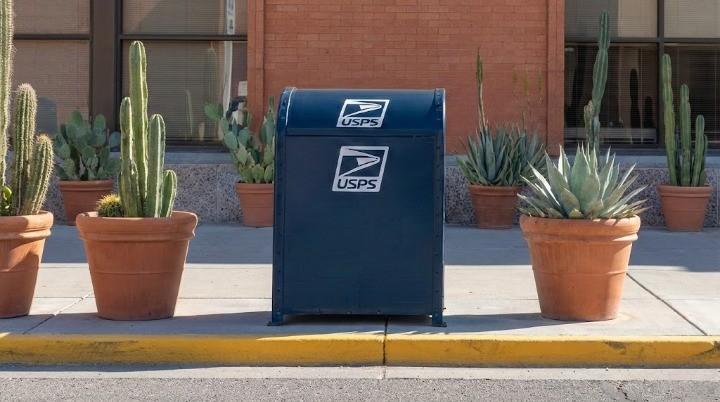
New processing workflows mean that mail dropped in a blue collection box after specific cutoff times—often as early as 12:00 PM or 2:00 PM—may not be processed or postmarked until the next business day.
If you are mailing a tax return or a legal document with a strict deadline, do not rely on a blue box drop-off in the late afternoon. You risk missing the postmark date. Recommendation: For time-sensitive legal mail, always go to the retail counter and request a hand-cancellation or a “Round Date” stamp to prove the date of mailing.
Leg 1 to Leg 3: How the 5-Digit ZIP Model Impacts Speed
The 2026 service standards have intentionally slowed down approximately 11% of First-Class Mail to utilize more reliable surface transportation (trucks) instead of air cargo.
-
Leg 1 (Local): Mail staying within a local 5-digit ZIP area is generally unaffected.
-
Leg 2 (Regional): Mail moving to a nearby processing center may see a 1-day increase in transit time.
-
Leg 3 (National): Cross-country mail that previously flew is now more likely to drive, adding up to 2 days to the delivery window.
This “silent blackout” means a letter that took 3 days in 2024 might now take 5 days in 2026. Adjust your billing and invoicing cycles accordingly.
International Mail Suspensions: Where You Can’t Ship Right Now
Global events and logistics failures have forced the USPS to issue a “Do Not Ship” list for several countries. As of February 2026, the International Service Alerts list includes total suspensions for:
-
Russia: Suspended due to unavailable transportation.
-
Belarus: Suspended due to unavailable transportation.
-
Sudan: Suspended due to civil unrest.
-
Haiti: Suspended due to security issues.
-
Yemen: Suspended due to lack of carrier availability.
If you attempt to ship to these locations, your package will be returned to the sender. Always check the USPS International Status Page before paying for postage.
How to Navigate a USPS Blackout (Pro Strategies)
When the USPS mail blackout hits—whether it’s a holiday like today or a service suspension—you need a backup plan.
Utilizing the USPS Service Commitment Tool
Stop guessing when your package will arrive. The USPS now offers a Service Commitment Tool on their PostalPro website. This tool allows you to enter your specific Origin ZIP and Destination ZIP to see the exact service standard (1-5 days) for that lane.
This is the only way to know for sure if your “3-Day” Priority Mail package will actually take 3 days or if it falls into a 4-day surface transport lane.
When to Switch to FedEx or UPS
Private carriers do not always follow the federal holiday schedule. For example, on Presidents’ Day and Columbus Day, UPS and FedEx usually run normal ground and express operations (though they may have modified retail store hours).
If the Post Office is closed and your package cannot wait until Tuesday, verify the pickup schedules for UPS or FedEx. Just be aware that they cannot deliver to a P.O. Box—you must use a physical street address.
Summary
The mailbox may be empty today, but understanding why is the key to better shipping strategy in 2026.
-
Federal Holidays: Plan for the 11 designated closure days.
-
Election Rules: Expect a “blackout” of political mail 60-90 days before elections.
-
Service Standards: Account for the slower surface transport lanes for cross-country mail.
The biggest risk in 2026 isn’t the holiday you know about; it’s the postmark date you miss because of the new processing rules. Don’t get caught off guard. Check the service alerts, use the commitment tool, and when in doubt, hand your important mail directly to a clerk.
Next Step: Need to confirm your specific delivery window? Check the USPS Service Commitment Tool here.
About the Author