Frank Blake Home Depot: Leadership, Legacy, and What Readers Should Know
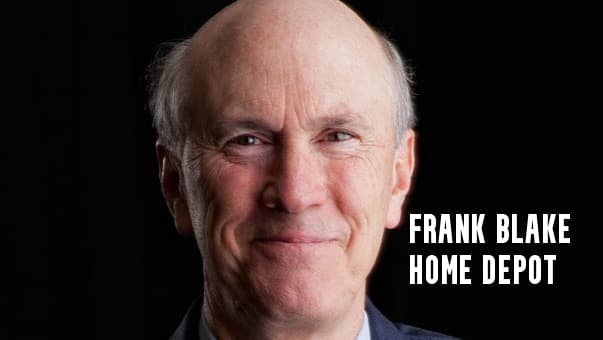
When people search for frank blake home depot, they are usually trying to understand more than a name. They want the story behind a former chief executive who led one of America’s biggest retailers during a crucial transition period. Frank Blake is best known as the former chairman and CEO of The Home Depot, a role he held after rising through senior leadership at the company and after earlier work at General Electric and the U.S. Department of Energy.
In practical terms, the frank blake home depot story is about steady leadership rather than celebrity-style executive branding. Public company materials from Home Depot and Delta show Blake as a lawyer-turned-executive with experience in corporate development, large-scale operations, and board leadership. That background helps explain why his tenure is often associated with operational focus, customer service, and long-range retail infrastructure rather than splashy personality-driven management.
Readers looking for authority sources can naturally place links such as The Home Depot company history, The Home Depot investor relations leadership transition announcement, and Delta Air Lines board announcement within this article.
Who Is Frank Blake at Home Depot?
Frank Blake, formally Francis S. Blake, became chairman and CEO of The Home Depot in 2007. Home Depot’s own company history places his election to that role in the same broader period when the retailer began major IT and supply-chain changes, store-service rebuilding efforts, and a pullback from growth driven mainly by opening more big-box locations. Later company announcements show that Craig Menear was named CEO effective November 1, 2014, while Blake remained chairman temporarily before retiring as chairman in early 2015.
That makes the frank blake home depot search term especially relevant for readers studying leadership transitions. Blake was not simply a placeholder executive. He arrived at a moment when the company needed a reset in priorities, and Home Depot’s own historical materials connect his leadership era with rebuilding store execution, modernizing systems, and laying groundwork for more integrated retail operations.
Frank Blake’s Background Before Home Depot CEO
Before becoming the public face of Home Depot, Blake had already served inside the company as vice chairman and as executive vice president for business development and corporate operations. Before that, Delta’s official board announcement says he held multiple senior executive roles at General Electric, including senior vice president for corporate business development, and he also served as Deputy Secretary of the U.S. Department of Energy from 2001 to 2002. The same source says he earned a bachelor’s degree from Harvard University and a J.D. from Columbia Law School.
That background matters because it helps explain his reputation. Blake’s public profile was built less around merchandising charisma and more around disciplined corporate management. For an SEO article, that is an important editorial angle: readers searching frank blake home depot are often trying to understand why he is seen as a serious operator in American retail history.
How Frank Blake Led Home Depot
A strong way to understand Blake’s leadership is to follow what Home Depot itself highlights in its historical timeline. The company says his era included Customers FIRST training and Power Hours to rebuild customer service in stores, an IT transformation, Rapid Deployment Centers that helped reshape supply chain operations, FIRST Phone mobile rollout to stores, and steps toward what the company later described as interconnected retail. Home Depot’s timeline also notes buy-online, pick-up-or-return-in-store capabilities and new fulfillment investments during the broader transition from Blake’s tenure into the Menear era.
That does not mean every improvement can be credited to one individual alone. Large retailers operate through teams, long planning cycles, and overlapping executive responsibilities. Still, Home Depot’s official materials clearly tie Blake’s period in leadership to a strategic shift away from simple square-footage expansion and toward service, systems, and execution. That is one of the biggest reasons the frank blake home depot topic still attracts interest.
Was Frank Blake Connected to a Home Depot Turnaround?
Cautious wording is best here. Calling Blake the sole architect of a “turnaround” can oversimplify a very large company’s performance. However, public Home Depot earnings materials do show meaningful improvement across the period after the late-2000s downturn. Home Depot reported fiscal 2009 sales of $66.2 billion, fiscal 2011 sales of $70.4 billion, and fiscal 2013 sales of $78.8 billion. The company also reported positive comparable sales and stronger earnings growth in later years of Blake’s tenure, especially by 2011 through 2013.
So a fair editorial reading is this: the frank blake home depot era is widely associated with recovery, but the more precise framing is that Blake led Home Depot through a period of operational sharpening and improving results. For readers and publishers, that wording is more credible than exaggerated claims.
Challenges During the Frank Blake Home Depot Era
A balanced profile should also mention that Blake’s tenure was not free from difficulties. In September 2014, Home Depot confirmed that its payment data systems had been breached, potentially affecting customers who used payment cards in U.S. and Canadian stores. In the company’s official statement, Blake apologized to customers and said the company was taking steps to address the malware and offer identity-protection services.
Including this point improves trustworthiness. Readers searching frank blake home depot are often looking for a full picture, not a promotional profile. A better business article acknowledges both the strengths of a leadership era and the challenges that tested it.
Frank Blake’s Legacy After Home Depot
After stepping back from day-to-day leadership at Home Depot, Blake continued in prominent board roles. Delta announced in 2014 that he joined its board, and in 2016 the airline said he became its non-executive chairman. Those later appointments suggest that, in corporate governance circles, Blake remained a respected leader after his Home Depot chapter formally ended.
For publishers, this is useful because it widens the article’s relevance. The frank blake home depot keyword is not only about one company. It also attracts readers interested in executive leadership, board governance, and the long afterlife of major corporate careers.
Why the Frank Blake Home Depot Topic Still Matters
The continuing appeal of the frank blake home depot topic comes down to three things. First, Home Depot is one of the most recognizable retail brands in the United States, so former CEOs remain part of public business memory. Second, Blake’s tenure overlaps with a period when large retailers had to rethink operations, supply chains, digital integration, and in-store service. Third, his leadership style is often viewed as measured and institution-focused, which makes him an interesting contrast to louder executive archetypes. The first two points are directly supported by company history and leadership-transition materials; the third is an inference based on the pattern of his public record and the way official sources describe his roles and priorities.
For a general magazine or SEO publication, that gives the article a durable angle: Frank Blake matters not because he is constantly in the headlines, but because he represents a particular kind of corporate leadership that shaped a major American retailer during a consequential stretch of time.
Conclusion
The clearest answer to the frank blake home depot query is that Frank Blake was the former chairman and CEO who led Home Depot from 2007 until the 2014 leadership transition, after earlier senior roles at the company and prior experience at GE and the U.S. Department of Energy. His legacy is most closely tied to customer-service rebuilding, operational discipline, supply-chain modernization, and the early infrastructure behind a more connected retail model. Any fair assessment should also note that his period in charge included significant challenges, including the 2014 payment-card breach disclosure.
For publishers targeting U.S. readers, this makes the keyword valuable because it blends biography, retail history, leadership analysis, and brand recognition into one search-friendly topic. That combination is exactly why frank blake home depot remains a practical and publishable business-profile subject.
FAQs
Who is Frank Blake in Home Depot history?
Frank Blake is the former chairman and CEO of The Home Depot. Company materials place him in the top leadership role beginning in 2007, and Home Depot later announced Craig Menear as CEO effective November 1, 2014, with Blake remaining chairman for a short transition period.
When did Frank Blake lead Home Depot?
The official timeline and transition announcements indicate that Frank Blake led Home Depot as chairman and CEO from 2007 until the CEO succession in late 2014, with his chairmanship ending in early 2015.
Why is frank blake home depot a popular search term?
It is a popular search because people want a concise explanation of who Blake was, how he influenced Home Depot’s strategy, and what his long-term legacy was in U.S. retail leadership. That inference is supported by the breadth of official materials covering his tenure, succession, and later board roles.
What changed at Home Depot during Frank Blake’s tenure?
Home Depot’s own historical materials associate Blake’s era with customer-service rebuilding, IT modernization, supply-chain transformation, mobile tools for store associates, and early interconnected retail capabilities.
What did Frank Blake do after Home Depot?
After Home Depot, Blake continued in major board leadership roles. Delta announced that he joined its board in 2014 and became non-executive chairman in 2016.