
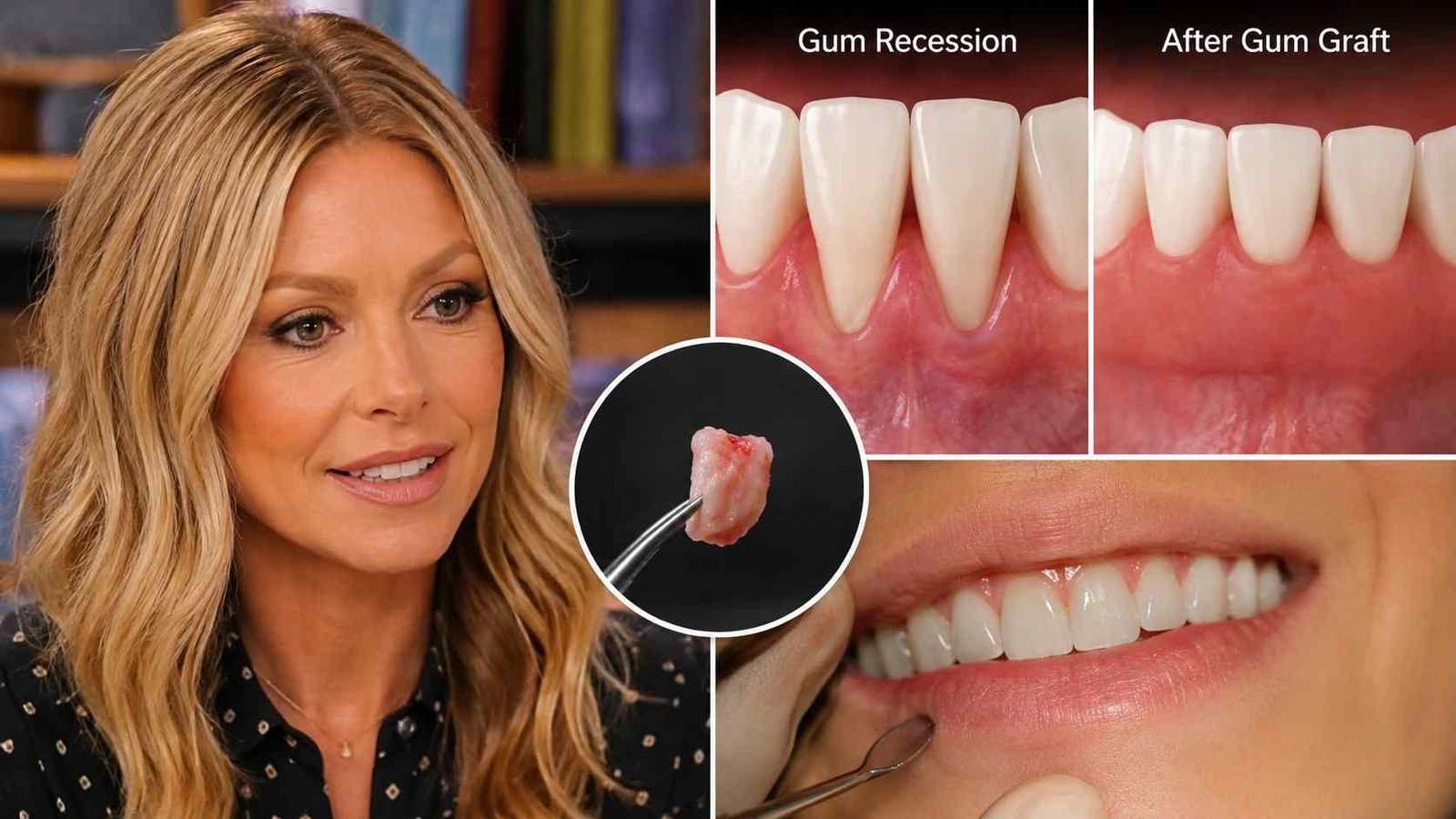
Fans noticed her sudden absence from morning television, leaving many asking about the details behind the Kelly Ripa dental procedure. Recently, the talk show host revealed she underwent a painful gum graft surgery to repair severe gum recession. According to Ripa, the procedure involved taking tissue from the roof of her mouth to rebuild her damaged gum line.
The Kelly Ripa dental procedure was a gum graft surgery required to treat severe gum recession. The television host admitted that years of aggressive over-brushing damaged her gums. As a result, her dentist had to transplant healthy tissue from the roof of her mouth to successfully restore her gum line.
Key Takeaways
-
Kelly Ripa stepped away from her morning show in late July 2026 to recover from dental surgery.
-
The official Kelly Ripa dental procedure was a periodontal gum graft.
-
Years of aggressive tooth brushing caused her severe gum recession.
-
The healing process required a strict 10-day period of absolute silence.
-
Doctors take skin from the roof of the mouth and place it over exposed tooth roots to fix the damage.
-
Ripa delayed the surgery for five years before doctors warned her to act immediately.
Why Did Kelly Need Surgery?
During an episode of her podcast, “Let’s Talk Off Camera,” the 55-year-old host confessed to guest Michelle Buteau that she is an aggressive over-brusher. She called it a “good bad habit” that eventually caught up with her.
While having clean teeth is a great goal, brushing too often and too hard pushes the gum tissue away from the tooth. Over time, this exposes the sensitive root of the tooth. Ripa admitted her dentist advised her to get the surgery five years ago, but she put it off due to her busy television schedule. Recently, her doctor warned her that she no longer had the luxury of time.
What Exactly Is a Gum Graft?
When your gums recede, you lose the natural defense against bacteria and sensitivity. To fix this, periodontists perform a gum graft.
During this treatment, the doctor removes a small piece of healthy tissue from the roof of the patient’s mouth. They then stitch this tissue over the exposed tooth roots. According to health experts, this prevents further recession, reduces sensitivity, and protects the bone. You can read more about the specifics of this treatment via the Cleveland Clinic.
The Danger of Over-Brushing
Many people damage their smiles without realizing it. Here is a look at the difference between proper oral care and the habits that lead to painful surgeries.
| Habit Focus | Healthy Brushing | Over-Brushing (Toothbrush Abrasion) |
| Bristle Type | Soft bristles | Medium or hard bristles |
| Technique | Gentle circular motions | Aggressive back-and-forth scrubbing |
| Frequency | Twice a day | More than three times a day |
| Pressure | Very light pressure | Heavy pressure |
The Painful Recovery Process
While Ripa rested at home, her husband and co-host Mark Consuelos shared updates on “Live with Kelly and Mark”. Consuelos noted that his wife usually has a very high pain tolerance, often skipping numbing medication for routine dental work. However, he admitted this specific surgery was incredibly painful.
The recovery came with a very strict set of rules.
-
No talking: She was ordered to remain completely silent for 10 days to allow the delicate graft to heal.
-
Soft foods only: Her diet was restricted to soft items like yogurt and mashed potatoes.
-
No straws allowed: The suction from a straw can pull the healing tissue apart or dislodge blood clots.
-
No stretching: She was told not to pull her lip down to check on the stitches.
A Very Common Mistake
Many people think that brushing harder means getting your teeth cleaner. This is a very common misunderstanding. Pressing too hard actually strips away your protective enamel and destroys your soft tissue. The American Dental Association notes that gentle brushing with a soft-bristled brush is much safer and highly effective for plaque removal. You can review their official guidelines on proper brushing techniques.
Practical Experience Signals
Think about how you hold your toothbrush in the morning. If the bristles look flattened, bent, and frayed after just a few weeks of use, you are probably applying too much pressure. We recommend holding your brush with just two fingers to instantly lighten your grip. Let the tips of the bristles do the work, rather than scrubbing with the sides.
Conclusion
The Kelly Ripa dental procedure highlights how easily a good habit can turn into a painful health issue. Gum graft surgery is a serious intervention that requires weeks of careful recovery. By paying attention to your daily habits, you can protect your smile and avoid the dentist’s chair.
Your Next Steps:
-
Check your toothbrush today and throw it away if the bristles are stiff or frayed.
-
Switch to a soft-bristled brush and practice using a lighter grip.
-
Schedule an appointment with your dentist if you notice your teeth looking longer or feeling extra sensitive to cold drinks.
Frequently Asked Questions
What surgery did Kelly Ripa just have?
She had a periodontal gum graft to treat severe gum recession caused by excessive tooth brushing.
Why was Kelly Ripa missing from her show?
She took a temporary break from “Live with Kelly and Mark” to recover from her oral surgery, as her doctor ordered her not to speak for 10 days.
Who filled in for Kelly Ripa during her surgery?
Several guest hosts stepped in to help Mark Consuelos, including musician Kevin Jonas.
How long does a gum graft take to heal?
Initial healing takes about one to two weeks, though complete tissue integration can take several months depending on the severity of the graft.
Can receding gums grow back naturally?
No. Once gum tissue pulls away from the tooth root, it cannot grow back on its own. Surgical intervention is required to replace the missing tissue.