What is droven.io rpa and business automation Really?
If you have been searching for “droven.io rpa and business automation”, you might be feeling confused. You probably saw articles claiming it is a powerful new software platform. Here is the honest truth: Droven.io is not an app or a software tool. It is an educational website that publishes articles about tech trends. If you want to automate your business tasks, you cannot sign up for Droven.io. However, the concepts of RPA (Robotic Process Automation) and business automation are very real. This guide explains what you actually need to know to automate your company this year.
Droven.io is an online tech education blog, not a robotic process automation software. While the site publishes guides on how automation works, businesses looking to actually automate their workflows should evaluate real software platforms like UiPath, Zapier, or Make instead.
Key Takeaways on RPA and Business Automation
-
Droven.io functions as an informational tech blog, not a software product.
-
RPA stands for Robotic Process Automation, which handles repetitive digital tasks automatically.
-
True business automation requires verified software platforms designed for your specific industry.
-
Identifying your highest volume manual tasks is the vital first step before buying any software.
-
Process mapping matters more than the specific tool you choose to purchase.
What is droven.io rpa and business automation Really?
When business owners look for tools to speed up their operations, they often search for reviews. Recently, the name Droven.io has popped up in various online articles. These articles often describe it as a fast, intelligent automation platform.
In reality, Droven.io is a content platform. It explains complex tech concepts like cloud computing, artificial intelligence, and cybersecurity to American audiences. The confusion started when several automated blog networks began summarizing its articles and mistakenly labeled the website itself as a software product.
A Common Mistake About Business Automation Tools
The most frequent mistake businesses make is chasing trending software names without verifying if the product exists or fits their needs. Many business owners waste hours looking for a signup page for a tool they read about in a low-quality article. Always check for a clear pricing page and verifiable customer reviews on platforms like G2 or Capterra before dedicating time to a new tool.
What Real RPA and Business Automation Looks Like
If you came here looking for droven.io rpa and business automation, you clearly have a business problem you want to solve. You likely want to reduce manual data entry, speed up customer replies, or sync your accounting software with your daily sales reports.
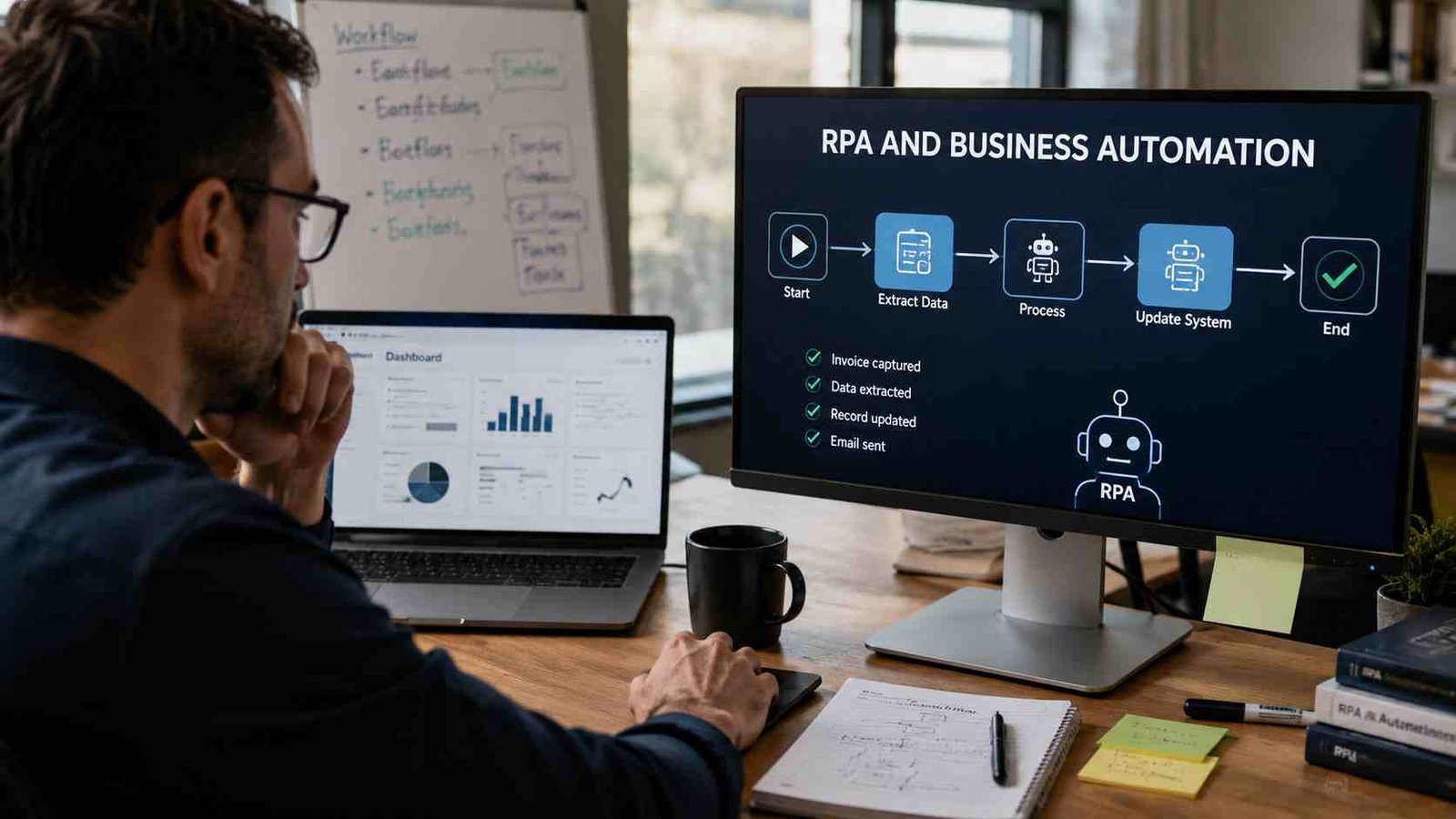
Robotic Process Automation (RPA) uses software “bots” to mimic human actions on a computer. If you have an employee who clicks the same five buttons every morning to generate a report, an RPA tool can do that task instantly in the background.
To learn more about how the underlying technology functions, you can read IBM’s official guide on Robotic Process Automation.
Top RPA Software Alternatives for US Businesses
Since Droven.io is not an option for your software stack, here are the actual tools you should consider using:
How to Implement Robotic Process Automation Without Getting Lost
Buying an automation tool will not fix a broken process. You have to map out your internal steps first. Here is a practical framework to get started.
-
Identify High Volume Tasks: Look for tasks that your team performs dozens of times a week. Data entry, invoice processing, and lead routing are great targets.
-
Map the Exact Steps: Write down every single click required to finish the task. Automation software needs exact instructions.
-
Run a Small Test: Pick one simple workflow. Connect your tools and run a test with fake data to ensure the automation does not create errors.
-
Train Your Team: Show your staff how the new automated system works. Make sure they know what to do if the software encounters an error and stops running.
Helpful Business Automation Observations for Small Businesses
Consider a practical scenario. A small US accounting firm might spend 20 hours a week manually copying client data from emails into an Excel spreadsheet. By setting up a simple Zapier connection, the firm can automatically pull email attachments and organize the data in a spreadsheet. The decision factors here are simple: the cost of the software subscription is much lower than paying an employee for 20 hours of manual data entry.
Conclusion on droven.io rpa and business automation
The buzz around droven.io rpa and business automation is based on a misunderstanding of what the website actually does. While the site provides solid tech education, it cannot automate your daily workflows.
To take real action in your business today:
-
Stop searching for trending names and look at your own daily bottlenecks.
-
Pick a verified tool like Zapier or UiPath that matches your team’s technical skill level.
-
Start by automating just one repetitive task this week to test the waters.
FAQs on RPA and Business Automation Software
What is Droven.io?
Droven.io is an educational technology website that publishes articles about artificial intelligence, cloud computing, and cybersecurity. It is not a software product.
Is Droven.io an RPA software?
No. It is a blog that explains how RPA works, but it does not sell or offer any automation software for businesses to use.
What does RPA stand for in business?
RPA stands for Robotic Process Automation. It is a type of technology that uses software bots to handle repetitive, rule-based digital tasks.
How much does business automation cost?
Basic workflow automation tools often have free starter tiers. Paid plans for small businesses typically range from $20 to $100 per month, while enterprise RPA platforms can cost thousands of dollars annually.
What are the best automation tools for small businesses?
For most small businesses, web-based tools like Zapier, Make, and Microsoft Power Automate are the easiest and most cost-effective options to start with.
Do I need to know how to code to use automation tools?
Not always. Many modern automation platforms feature drag-and-drop visual builders that allow anyone to connect apps without writing a single line of code.