
Blizzard of 78 Explained: Ohio vs Boston, Timeline, Deaths & Records
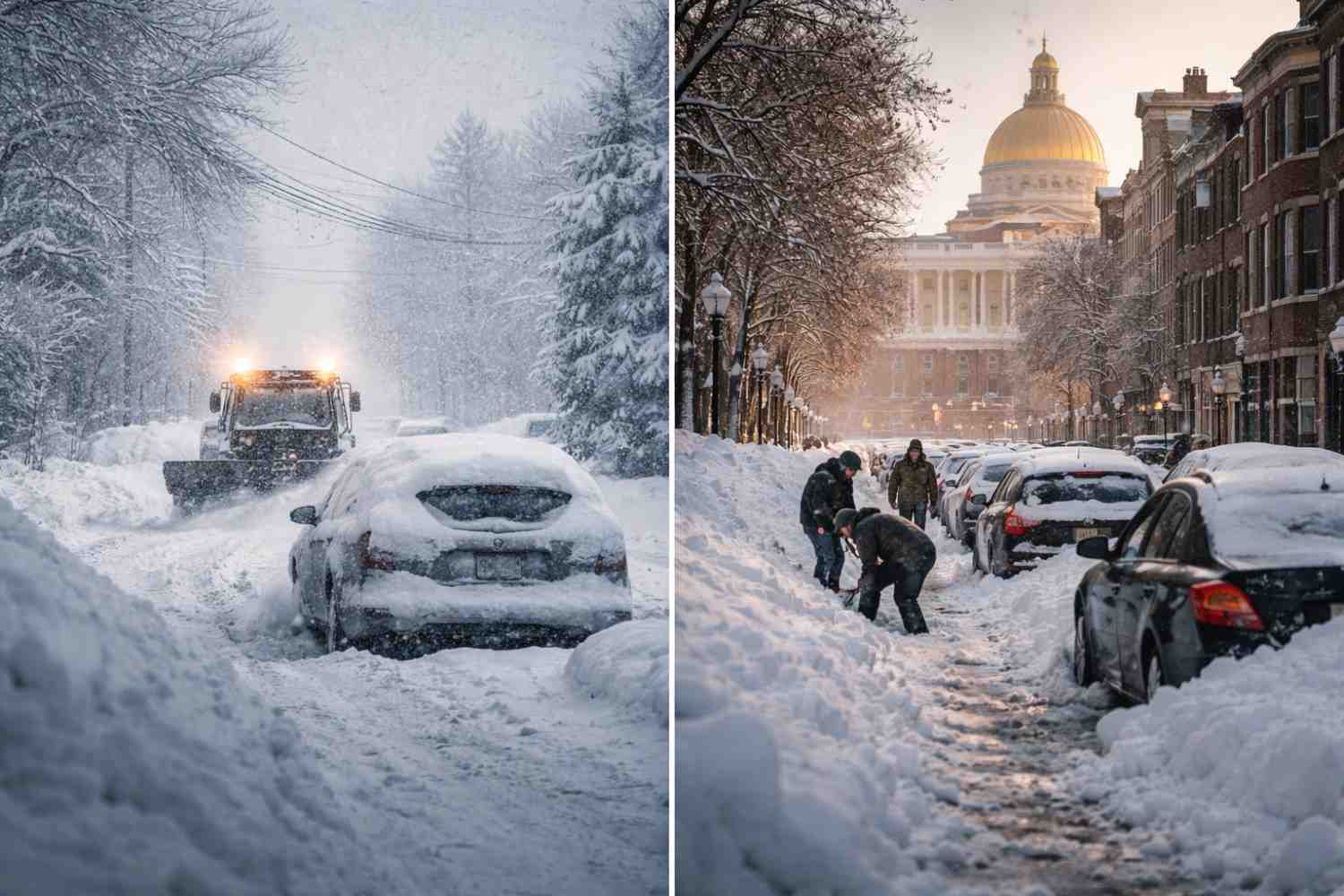
Search for blizzard of 78 and you can land on two different stories. Some results describe Ohio and the Great Lakes in late January 1978. Others describe Boston and New England in early February 1978.
That is why readers see mixed snowfall totals, mixed death counts, and mixed timelines.
This article separates the two storms clearly, compares the key facts side by side, and shows how to cite each event correctly for school work, journalism, and historical research.
How this article was verified
This guide prioritizes official sources first, especially NOAA and National Weather Service pages, the NOAA NCEI RSI dataset documentation, and Massachusetts state government records. Secondary sources help with search intent and terminology, but not with core numeric claims.
[NWS Wilmington Great Blizzard of 1978 historical page]
Why “Blizzard of 78” Usually Means Two Different Storms
The phrase Blizzard of 78 is a search term, not a precise event label.
In practice, it usually refers to one of these:
The January 1978 Great Blizzard of 1978 (Ohio Valley/Great Lakes)
This is the storm that dominates Ohio, Indiana, and Great Lakes memory. NWS Ohio and Indiana offices describe explosive intensification, extreme winds, dangerous wind chills, and severe transportation shutdowns.
This is also the storm often called the Great Blizzard of 1978 and sometimes the Cleveland Superbomb in later summaries.
The February 1978 Blizzard of ’78 (Boston/Massachusetts/New England)
This is the storm many New England readers mean, especially in Massachusetts and Rhode Island. The Massachusetts state page emphasizes Boston snowfall, severe coastal flooding, and massive coastal damage.
For Boston area readers, this is often simply “the Blizzard of ’78.”
Why search results and memory based retellings mix them up
People remember the storm that hit their region.
Search engines also mix intent because the same shorthand phrase is used for both events. If a page does not state the date and region in the first few lines, readers can easily combine facts from both storms and produce inaccurate summaries.
Blizzard of 78 Quick Comparison Table (Ohio vs Boston/New England)
Here are the facts most readers need first.
Side by side facts readers usually need first
| Category | January storm (Great Lakes / Ohio) | February storm (Boston / New England) |
|---|---|---|
| Common shorthand | Great Blizzard of 1978 | Blizzard of ’78 (New England) |
| Main date window | Jan 25 to 27, 1978 (peak impacts in many Ohio areas on Jan 26) | Feb 5 to 7, 1978 |
| Core geography | Ohio Valley, Great Lakes, parts of Midwest | Massachusetts and broader Northeast / New England |
| Defining impact pattern | Extreme winds, whiteouts, deep drifts, statewide shutdowns | Heavy snow in Boston plus destructive coastal flooding and storm tide |
| Example snowfall figures often cited | NWS Wilmington lists 4.7″ Columbus, 6.9″ Cincinnati, 12.9″ Dayton (Jan 25 to 27 totals) | Mass.gov lists 27.1″ in Boston (Feb 6 to 7) |
| Widely cited fatalities | 51 in Ohio (Ohio scoped figures on NWS Ohio pages) | 99 total on Mass.gov page summary (Massachusetts page framing for the New England event) |
| Signature metrics | Cleveland pressure 28.28 inHg, gusts to 82 mph in Cleveland, ore carrier report gust to 111 mph | Boston tide peak 15.2 feet above mean low water; major tidal flooding threshold cited at 13.6 feet |
How to read conflicting numbers without being misled
Use this rule every time you cite the Blizzard of 78:
-
Name the region
-
Ohio / Great Lakes or Boston / New England.
-
-
State the dates
-
Late January or early February.
-
-
Label the scope of the number
-
Ohio only, Massachusetts summary, or multi state total.
-
-
Check the dollar year for damages
-
Example: Mass.gov cites damage exceeding $2.3 billion in 1998 dollars for the Massachusetts Blizzard of ’78 page summary.
-
If a source does not clearly define the scope, treat the figure as incomplete.
The Great Blizzard of 1978 in Ohio and the Great Lakes (January 25 to 27, 1978)
Storm setup and rapid intensification (the “superbomb” or bomb cyclone context)
NWS Wilmington describes a relatively rare merger of two upper level waves that drove explosive intensification.
The region started with rain and fog on the evening of January 25, with temperatures in the 30s and 40s. Then arctic air surged in overnight. By early January 26, blizzard conditions spread quickly across Ohio.
This pattern explains why so many people remember the storm as a shock event. Conditions changed fast.
Pressure records and why Cleveland’s reading is so often cited
NWS Wilmington and NWS Cleveland both highlight the same Cleveland pressure reading, 28.28 inches, as a historic benchmark in Ohio.
That number appears in many retellings because it captures how intense the storm became, not just how much snow fell.
Wind gusts, whiteout conditions, and severe blizzard criteria
NWS Wilmington reports that on January 26:
-
wind gusts averaged 50 to 70 mph across much of the day
-
gusts reached 69 mph at Dayton and Columbus
-
gusts reached 82 mph in Cleveland
-
an ore carrier near Sandusky reported 86 mph sustained winds with gusts to 111 mph
-
wind chills were around minus 50 F or lower
This is why Ohio coverage often focuses on wind, drifting, and visibility just as much as snowfall totals.
Ohio transportation shutdowns, National Guard response, and statewide disruption
The NWS Cleveland special edition describes the storm as the worst winter storm in Ohio history and states that transportation, business, industry, and schools were closed statewide for two days. It also notes that normal pace did not return for five days.
NWS Wilmington adds more operational detail. It reports prolonged closures including Interstate 75, a section of Interstate 475 near Toledo, and the entire Ohio Turnpike, which it says closed for the first time in its history.
That combination of closures, stranded vehicles, and food distribution support is a major reason this storm remains a living reference point in Ohio.
Ohio deaths and impact figures (with source scope clarification)
Two Ohio focused NWS pages commonly cited in historical summaries report 51 deaths in Ohio and $73 million in agricultural losses.
Use those figures only when your sentence clearly says Ohio. Do not mix them with Boston snowfall totals or New England fatality counts.
[NWS Cleveland Blizzard of 1978 anniversary page]
The Blizzard of ’78 in Boston, Massachusetts, and New England (February 5 to 7, 1978)
How the February nor’easter developed and stalled near southern New England
The February event was a powerful Northeast blizzard and coastal storm. In New England memory, this is the Blizzard of ’78.
For this article, the key point is practical: it is a different event from the January Great Lakes and Ohio blizzard, even though both happened in 1978 and both are historic.
Boston snowfall totals and regional record context
The Massachusetts Office of Coastal Zone Management page states that the Blizzard of ’78 dumped 27.1 inches of snow on Boston on February 6 and 7 and paralyzed the city and surrounding suburbs for a week.
That is one of the most cited Boston figures on this topic and a common reason searchers think every “Blizzard of 78” page should mention Boston first.
Coastal flooding, storm tide, and Massachusetts shoreline damage
Mass.gov also emphasizes that along parts of the immediate coast, snow was less of the issue than tides.
The same page reports:
-
peak ocean level at 15.2 feet above mean low water at the Boston Tide Station
-
major tidal flooding threshold of 13.6 feet along Boston and east facing Massachusetts coast
-
severe damage to homes, roads, and infrastructure due to tides and waves
This coastal flooding angle is one of the biggest differences between New England coverage and Ohio coverage.
Travel bans, stranded vehicles, and emergency response
Massachusetts coverage of the Blizzard of ’78 often centers on travel paralysis, stranded vehicles, and emergency restrictions. State executive order records from February 1978 also document emergency measures and restrictions on non essential vehicle use.
This is part of why the storm became a long lasting cultural marker in New England.
Fatalities and damage estimates (with scope and dollar year context)
The Mass.gov CZM page reports 99 deaths and damage estimates exceeding $2.3 billion (in 1998 dollars).
Again, label the scope. That figure is not the same as the Ohio specific NWS death count used for the January storm.
[Massachusetts CZM Blizzard of ’78 page]
Blizzard of ’78 Snowfall Totals and Why Different Sources Report Different Numbers
City totals vs storm wide totals vs local maxima
This topic creates confusion because “snowfall total” can mean different things:
-
one city official total
-
a station specific period total
-
storm wide maxima
-
region wide summary values
A Boston total and an Ohio city total can both be correct, but they describe different storms and different places.
Why Boston and Providence totals dominate Northeast coverage
Northeast coverage often foregrounds major metro impacts, especially Boston and Providence, because of population density, media concentration, and coastal damage.
That is normal. It does not mean the January Ohio and Great Lakes storm was smaller in every metric.
Why Ohio coverage emphasizes wind, pressure, and drifts as much as snowfall
NWS Wilmington explains that snowfall was difficult to measure in places because of strong winds. That is a major clue for how to read Ohio reporting.
In the January storm, the hazard story includes:
-
whiteouts
-
wind driven drifting
-
prolonged road closures
-
extreme wind chill
-
infrastructure disruption
Best practice for citation ready snowfall reporting
Use this format in your article or school report:
-
City + state
-
Date range
-
Storm name or region
-
Exact source
-
Measurement context
Example format:
Dayton, Ohio recorded 12.9 inches for the January 25 to 27, 1978 storm total, according to the NWS Wilmington historical event page.
That one sentence prevents most citation errors.
Why the Blizzard of 78 Still Matters in U.S. Weather History (Records, RSI, Legacy)
What the Regional Snowfall Index (RSI) measures (and what it does not)
NOAA NCEI describes the Regional Snowfall Index (RSI) as an index of significant snowstorms in the eastern two thirds of the U.S. It uses snowfall, storm extent, and population exposure to compare societal impact on a 1 to 5 scale.
That means RSI is not just a snowfall contest.
It is an impact framework.
How RSI differs from NESIS and why that matters for comparisons
NCEI explains that RSI evolved from NESIS. The key difference is that RSI is regional and uses region specific thresholds, while NESIS was calibrated around Northeast storm impacts.
This matters because readers often compare storms across regions using labels that sound similar but measure different things.
Forecasting era context: why public response and preparedness mattered
The NOAA Institutional Repository includes the official 1978 National Weather Service report on the Northeast Blizzard of ’78. Its existence matters for more than history.
It shows that officials treated the storm as a major event for post storm assessment, warning evaluation, and operational learning.
That is one reason these storms still appear in forecasting, emergency management, and public memory discussions.
Why the storm remains a benchmark in Ohio and New England memory
The answer is simple.
The Blizzard of 78 is still used as a benchmark because it combines meteorological intensity with human disruption. It shut down roads, businesses, and routines at a scale people remembered for decades.
[NOAA NCEI Regional Snowfall Index documentation]
How to Cite the Blizzard of ’78 Correctly (For Students, Journalists, and Researchers)
Step 1: State which 1978 storm you mean (January Midwest/Ohio or February Northeast/New England)
Do this in your first sentence.
If you skip this step, readers will assume the wrong event.
Step 2: Label the geography and date range in the same sentence
Good example:
-
“This section refers to the January 25 to 27, 1978 Great Lakes and Ohio storm.”
Good example:
-
“This paragraph refers to the February 5 to 7, 1978 New England Blizzard of ’78.”
Step 3: Match every number to a source scope (Ohio only, Massachusetts summary, Northeast wide, etc.)
This is the habit that separates a clean history explainer from a confusing one.
If you cannot verify scope, use this wording:
-
Verified data not available, cannot assume.
Citation examples (APA, newsroom style, plain web citation)
-
Plain web citation
-
National Weather Service Wilmington OH. “The Great Blizzard of 1978.” (historical page, accessed date listed in your references).
-
-
Newsroom style
-
According to NWS Wilmington’s Great Blizzard of 1978 historical page, Ohio region wind gusts reached hurricane force range in places and visibility stayed near zero for much of Jan. 26.
-
-
Research style
-
Cite the agency, page title, year if shown, and access date if the page is undated.
-
Common mistake
Mixing a Boston snowfall total with an Ohio death total in the same paragraph without saying they come from different storms.
FAQs
Was the Blizzard of 78 in Ohio or Boston?
Both, but not as one storm. People use “Blizzard of 78” to refer to the January Great Lakes and Ohio blizzard and also the February New England blizzard. Always specify date and region.
When was the Blizzard of 78 exactly?
There are two common answers. The Great Lakes and Ohio storm peaked around January 25 to 27, 1978. The New England Blizzard of ’78 hit February 5 to 7, 1978.
How much snow fell in Boston during the Blizzard of ’78?
Mass.gov CZM reports 27.1 inches in Boston for February 6 and 7, 1978. That figure is tied to the New England event, not the January Ohio storm.
How many people died in the Blizzard of 78?
You need a scoped answer. Ohio focused NWS pages commonly cite 51 deaths in Ohio for the January storm. The Massachusetts CZM page cites 99 deaths in its Blizzard of ’78 summary for the New England event.
Why is the Blizzard of ’78 considered so historic?
Because it combined intense weather with long lasting public disruption. Different regions remember different features, including whiteouts and highway shutdowns in Ohio, and heavy snow plus coastal flooding in Massachusetts.
Was the Blizzard of 78 a bomb cyclone (bombogenesis)?
The January Great Lakes and Ohio storm is widely described in modern summaries with explosive intensification language and “superbomb” references. NWS historical pages describe rapid pressure falls and unusual strengthening patterns that fit why people use that term.
Which states were affected by the Great Blizzard of 1978?
The January storm affected a broad Great Lakes and Ohio Valley region and parts of the Midwest. Ohio and Indiana NWS pages are strong starting points for state level details, with additional local NWS offices covering other affected areas.
What were the strongest winds and lowest pressure readings reported?
For the January Ohio centered event, NWS Wilmington reports Cleveland at 28.28 inHg, gusts to 82 mph in Cleveland, and an ore carrier near Sandusky reporting 111 mph gusts. Those figures are often quoted because they capture the storm’s intensity.
Key Takeaways From the Blizzard of 78 (What to Remember Before You Cite It)
The one sentence takeaway
“Blizzard of 78” usually needs a date and region to be accurate.
The practical takeaway
Use source scoped facts, not memory based summaries.
When you write about this topic, lead with:
-
which storm
-
where
-
when
-
which source measured the number
Final thought and next step
The best weather history explainers do not just list dramatic facts. They remove confusion first.
If you are writing a report, article, or post, keep this page open and pull your facts from the comparison table before you draft.
[NOAA Institutional Repository Northeast Blizzard of ’78 report record]