
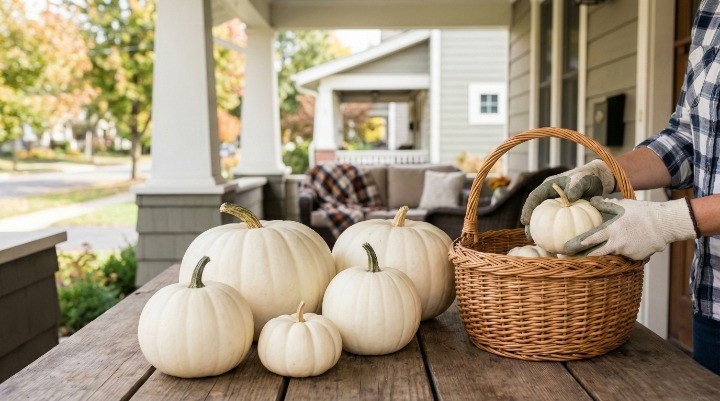
White Pumpkin Varieties: 9 Best Types for Eating & Decor
In 2024, United States pumpkin production hit a staggering 1.44 billion pounds. Most of those were traditional orange carving types. However, a massive aesthetic shift has taken over American neighborhoods. The monochrome porch trend is everywhere.
Finding the perfect white pumpkin requires more than just picking a pale gourd off a farm stand. Beyond their striking appearance, these varieties offer distinct culinary advantages and unique gardening challenges. This guide breaks down the top nine varieties. We will categorize them by their best use, nutritional profile, and professional growing requirements so you can plan your patch perfectly.
Why White Pumpkins are Dominating Trends
The shift from bright orange to neutral tones has completely changed the fall decor market. American home decorators now favor subtle, elevated autumn displays. White Cucurbita maxima and Cucurbita pepo varieties fit perfectly into this modern aesthetic.
I noticed this shift firsthand while touring wholesale markets in Illinois last season. Buyers were bypassing classic orange bins entirely. They were willing to pay premium prices, sometimes reaching $350 per bin, for heirloom seeds and specialty ornamental gourds. These pale varieties provide a blank canvas for painting, carving, and elegant table centerpieces.
Top 9 White Pumpkin Varieties: From Mini to Giant
Choosing the right cultivar depends entirely on your end goal. Some vines produce tiny, palm-sized fruits, while others yield massive giants. Here are the top performers for home gardeners and decorators.
Best for Small Spaces & Decor: Baby Boo and Casperita
Baby Boo These are miniature, ribbed beauties. They grow on a compact vine spread, making them ideal for small garden beds. Baby Boo pumpkins measure just two to three inches across. They are perfect for indoor table settings or classroom crafts.
Casperita Casperita is another pint-sized option. It resembles a classic pumpkin shape but shrinks down to about a pound. It features a deep green handle and bright white skin. Casperita offers excellent powdery mildew resistance, a major plus for humid climates in the Southeast or Midwest.
Best for Carving: Lumina and Casper
Lumina Lumina is the gold standard for carving. It averages 10 to 15 pounds and features a smooth, chalky exterior. The flesh inside remains bright orange. This creates a spectacular glowing effect when you place a candle inside.
Casper Casper grows slightly larger and possesses a very thick rind. This thick skin makes it slightly harder to carve intricate designs. However, its brilliant white color holds up beautifully outdoors.
Best for Culinary Use: Flat White Boer and Silver Moon
Flat White Boer This heirloom variety looks exactly like its name suggests. It is flat, wide, and heavily ribbed. Originating from South Africa, it has adapted incredibly well to the US climate. It is widely considered the best tasting white variety available.
Silver Moon Silver Moon is a newer hybrid. It boasts a slightly silvery sheen and dense, sweet flesh. It resists common soil diseases and provides an excellent yield for market farmers.
The Giants: Full Moon and Polar Bear
Full Moon If you want to win a local county fair, plant Full Moon seeds. These massive gourds can exceed 50 to 90 pounds. They require an enormous amount of space and heavy feeding with nitrogen-rich fertilizer.
Polar Bear Polar Bear retains its stark white color much better than other large varieties. It reaches about 30 to 40 pounds. The long, sturdy stems make them a favorite at high-end pumpkin patches.
Variety Comparison Matrix
Are White Pumpkins Edible? A Culinary Deep-Dive
Yes, almost all white pumpkins are entirely edible. In fact, many pastry chefs prefer them over standard orange varieties.
The Baker’s Verdict Do not use a carving pumpkin for your Thanksgiving pie. Standard orange carving types are stringy and watery. Instead, reach for a Flat White Boer or a Casper. The edible flesh inside these varieties is incredibly dense. They contain a higher sugar content and a velvety texture. This makes them far superior for pumpkin puree, custards, and soups.
According to 2025 research from the [External Link: National Institutes of Health], white-fleshed Cucurbita species have a unique nutritional profile. While they lack the massive beta-carotene levels of orange pumpkins, they make up for it in other areas. They are highly valued for their delicate, nutty flavor profile that does not overpower baked goods.
Growing White Pumpkins: Professional Tips
Growing white varieties requires more attention to detail than growing standard field pumpkins. The optimal soil temperature for germination is strictly between 70 and 80 degrees Fahrenheit. They generally require a 80 to 120-day maturity window.
You must manage the soil pH carefully. Aim for a slightly acidic soil around 6.5. Start with a balanced fertilizer and switch to a high-phosphorus formula once blossoms appear.
Managing Sunscald and the Yellowing Problem
The biggest complaint home gardeners have is that their prized white harvest turns yellow. This happens due to sunscald.
The Ghost-White Test Professional growers use a strict timeline to prevent yellowing. Do not leave these varieties in the field to cure. As soon as the rind is hard enough to resist a fingernail puncture, cut it from the vine. Move the fruit into a shaded, well-ventilated barn or garage immediately. Leaving them in direct September sunlight will turn a beautiful Lumina into a muddy yellow gourd within 48 hours.
The [External Link: University of Illinois Extension] confirms that prompt harvest is the only way to maintain that stark, ghostly hue.
Nutritional Benefits of the Ghost Pumpkin
You might assume that a lack of orange pigment means a lack of nutrition. That is completely false.
Data from the [External Link: USDA Economic Research Service] highlights the dense nutritional value of specialty squash. A standard 100-gram serving contains just 26 to 30 calories. This makes it an exceptionally low-calorie ingredient for health-conscious eaters.
They are packed with dietary fiber, which aids in digestion and satiety. Furthermore, these gourds are loaded with Vitamin C, potassium, and magnesium. The seeds are also edible and contain powerful bioactive compounds and healthy fats.
Harvesting and Storage for Maximum Longevity
If you plan to use your harvest for porch decor through Thanksgiving, proper curing is non-negotiable. An uncured pumpkin will rot within two weeks. A properly cured one has a storage life of up to three months.
Follow this professional method to maximize longevity:
-
Cut the stem cleanly. Leave at least three inches of handle. Never carry the fruit by the stem.
-
Wash away field dirt. Use a soft cloth and mild dish soap to remove soil.
-
The Bleach-Water Soak. Submerge the entire gourd in a solution of one tablespoon of household bleach per gallon of water for two minutes. This kills off the bacteria and mold spores that cause stem rot.
-
Air dry completely. Place them on a slatted wooden surface in a shaded, dry area for ten days to cure the rind.
-
Keep elevated. Once placed on your porch, sit them on a piece of cardboard or a wooden trivet. Direct contact with damp concrete accelerates rotting.
Final Thoughts on Your White Pumpkin Harvest
Selecting the right white pumpkin depends entirely on your end goal. You might want a high-sugar Flat White Boer for baking. Or perhaps you need a rot-resistant Polar Bear for a massive porch display.
These pale varieties are undeniably the divas of the autumn garden. They demand a bit more shade and careful handling than their orange cousins. However, the payoff is a premium, elegant aesthetic and incredible culinary versatility.
Are you ready to grow your own? [Internal Link: Check out our complete 2026 seed-starting calendar] to ensure you get your Lumina and Casper seeds in the ground exactly on time.
FAQs
Are white pumpkins edible?
Yes. Varieties like Casper and Flat White Boer have sweet, dense flesh that is excellent for baking and soups.
What are white pumpkins called?
They are not a separate botanical species. They are specific cultivars of Cucurbita maxima or Cucurbita pepo, sold under names like Lumina, Baby Boo, or Cotton Candy.
Do white pumpkins taste different than orange ones?
Yes. Culinary white varieties generally have a milder, creamier, and sweeter flavor profile compared to standard orange carving pumpkins.
Why did my white pumpkin turn yellow?
Overexposure to direct sunlight causes the skin to yellow. You must harvest them and move them to the shade as soon as they reach maturity.
Are white pumpkins natural or painted?
They are 100 percent natural. Agricultural experts have cross-bred traditional varieties over decades to isolate the recessive white color trait.
Can you carve a white pumpkin?
Absolutely. The Lumina variety is the best choice for carving due to its moderate rind thickness and bright orange interior flesh.
How long do white pumpkins last?
If properly cured and kept out of direct sunlight and freezing temperatures, they can last one to three months.
What is the best white pumpkin for pie?
The Flat White Boer is widely considered the best choice for pies. It features a very high sugar content and dense, non-watery flesh.