
City Killer Asteroids: 15,000 “Invisible” Rocks NASA Can’t Stop (2026)
Space is vast, but it is not empty. On February 16, 2026, planetary defense officials gathered to review a sobering statistic: humanity has identified fewer than 45% of the asteroids capable of flattening a major metropolitan area.
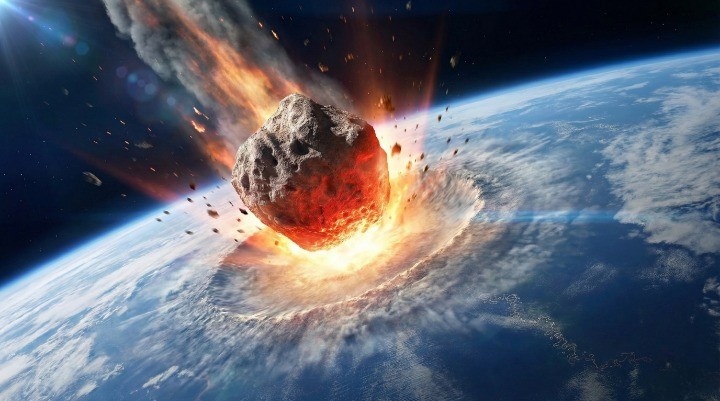
While “planet killers” (1 kilometer wide) like the dinosaur-extinguishing rock are 95% mapped and currently pose no threat, the mid-sized rocks remain a dangerous blind spot. These are the city killer asteroids—objects large enough to destroy New York City or London but small enough to hide in the glare of the sun.
We know how to stop them. The 2022 DART mission proved we can punch an asteroid off course. But you cannot deflect what you cannot see. And right now, thousands of these rocks are flying “invisible” through our cosmic backyard.
Here is the reality of Earth’s planetary defense status in 2026.
What is a “City Killer” Asteroid? (The 140-Meter Threshold)
NASA and the CNEOS officially categorize a “city killer” as a Near-Earth Object (NEO) measuring approximately 140 meters (460 feet) or larger.
To put that in perspective, this is an object roughly the size of the Washington Monument or a football stadium. While that sounds small compared to a planet, the physics of a collision at 40,000 miles per hour turns that rock into a bomb.
The Energy Equation
If a 140-meter stony asteroid struck land, it would release energy equivalent to approximately 100 to 200 megatons of TNT.
-
Hiroshima Bomb: 0.015 megatons.
-
Tsar Bomba (Largest nuke ever tested): 50 megatons.
-
City Killer Impact: ~150 megatons.
This is not an extinction-level event for the human species. Civilization would survive. But the impact would obliterate everything within a 50-mile radius, causing mass casualties and economic collapse.
Why Smaller Rocks Don’t Count
You might remember the Chelyabinsk meteor that exploded over Russia in 2013. That object was only 20 meters wide. It shattered windows and injured 1,500 people, but it never hit the ground. The atmosphere tore it apart.
A city killer asteroid is different. It is too dense and too large for the atmosphere to stop. It survives the descent and delivers its kinetic energy directly to the crust.
The 2026 Blind Spot: Why 60% of City Killers Are Missing
As of early 2026, the NASA Planetary Defense Coordination Office estimates there are roughly 25,000 NEAs (Near-Earth Asteroids) larger than 140 meters.
We have found only about 11,000 of them.
That leaves 14,000 to 15,000 hazardous objects currently orbiting the sun, completely untracked.
The “Sun Glare” Problem
Why haven’t we found them? Most asteroid hunting is done by ground-based optical telescopes. These telescopes work by spotting sunlight reflecting off the rock.
This creates two massive problems:
-
Dark Asteroids: Some asteroids are as dark as charcoal (carbonaceous). They reflect very little light, making them nearly invisible against the blackness of space.
-
The Day-Side Gap: Ground telescopes can only look into the night sky (away from the sun). If an asteroid approaches Earth from the direction of the sun, our telescopes are blinded by the glare.
This “day-side” approach is exactly how the Chelyabinsk meteor snuck up on us. To fix this, we need to move surveillance off the ground.
The Solution: NEO Surveyor (2027)
This is the game-changer experts are waiting for. The NEO Surveyor is a space-based infrared telescope scheduled for launch in late 2027.
Unlike optical telescopes, it detects heat, not light. Even a pitch-black asteroid warmed by the sun glows brightly in infrared. Once operational, NASA expects it to find 90% of the remaining city killer asteroids within a decade.
Planetary Defense Status Check: Are We Actually Ready?
Let’s assume we find a city killer asteroid on a collision course. Can we stop it?
The short answer is yes. The long answer is yes, but not today.
The Lesson from DART
In September 2022, NASA’s Double Asteroid Redirection Test (DART) slammed a vending-machine-sized spacecraft into the asteroid Dimorphos. It was a spectacular success, altering the asteroid’s orbit by 32 minutes.
This proved the “Kinetic Impactor” theory works. We don’t need to blow asteroids up; we just need to nudge them.
The “Standby” Crisis
Here is the catch that keeps planetary defense officers awake at night: We have no interceptors on standby.
If we discovered an asteroid hitting Earth in six months, we could do nothing.
-
Building a spacecraft takes 3-4 years.
-
Launch windows are dictated by orbital mechanics.
-
Travel time to the asteroid takes months or years.
Expert Insight: “To deflect a city killer effectively, we need a 5 to 10-year warning. We need time to verify the orbit, build the kinetic impactor, and launch it to meet the rock far enough away that a small nudge misses Earth. If we find it one year out, evacuation is our only option.” — Summary of findings from the 2025 IAA Planetary Defense Conference.
Current High-Priority Objects on the Risk List
We track risks using the Torino Scale (0 to 10). Level 0 is no hazard. Level 10 is certain global collision.
Currently, there are no known objects ranked above Level 0 or 1. However, two names frequently pop up in headlines.
1. The Case of 2024 YR4
Discovered late in 2024, this asteroid briefly caused concern for a potential 2032 impact. Initial data gave it a scary probability. However, as of January 2025, the ESA NEO Coordination Centre gathered more data and officially downgraded it. It is no longer considered a threat. This is the standard cycle: Discovery > Uncertainty/Fear > More Data > Safety confirmed.
2. 99942 Apophis (The 2029 Flyby)
On April 13, 2029, the asteroid Apophis (340 meters wide) will skim past Earth at a distance of just 20,000 miles—closer than our TV satellites.
It will be visible to the naked eye. While early calculations in 2004 suggested a hit, NASA has ruled out any impact risk for at least the next century. It will be a scientific bonanza, not a disaster.
The “Nuclear Option” and The Legal Wall
Hollywood loves to solve asteroid problems with nuclear weapons. In reality, nukes are a last resort, known as a Nuclear Standoff Burst.
Instead of drilling into the rock (Armageddon style), a nuclear device is detonated a few hundred meters away from the asteroid. The radiation vaporizes a layer of the asteroid’s surface, creating a rocket-like thrust that pushes it off course.
The 1967 Outer Space Treaty
There is a major legal hurdle: The Outer Space Treaty of 1967 strictly bans placing nuclear weapons in orbit or on celestial bodies.
While most legal scholars agree that saving Earth from extinction would override the treaty (necessity knows no law), the lack of a legal framework for testing or preparing these devices slows down research. Currently, the US relies on the kinetic impactor method (DART) as the primary strategy to avoid these geopolitical complications.
Summary: A Race Against the Clock
The threat of city killer asteroids is real, but it is manageable. We are not helpless dinosaurs. We have the math, the physics, and the engineering to protect our planet.
The gap lies in detection and readiness.
-
The Good News: We can deflect them.
-
The Bad News: We can’t see 60% of them yet.
-
The Reality: Until the NEO Surveyor launches in 2027 and completes its survey, we are relying on luck for the invisible 15,000.
Planetary defense is an insurance policy. The probability of a strike in your lifetime is low, but the cost of being unprepared is infinite.
FAQs
What would happen if a city-killer asteroid hit?
It would destroy a major metropolitan area, create a crater roughly 2 miles wide, and cause severe regional damage (earthquakes, shockwaves). It would not end human civilization.
How many city-killer asteroids are currently being tracked?
NASA tracks approximately 11,000 NEOs larger than 140 meters. However, models suggest roughly 15,000 more remain undiscovered.
Is there an asteroid hitting Earth in 2026?
No. As of February 2026, there are no known asteroids on a collision course with Earth for the next 100 years.
Can NASA stop an asteroid today?
Technically, yes, using DART technology. Practically, no, because we do not have a rocket on the launchpad ready to go. We need years of lead time.
What is the difference between a planet killer and a city killer?
A planet killer is over 1km wide and affects the global climate (like the dinosaur event). A city killer is 140m+ and causes massive, but localized, regional destruction.
How much notice would we have before an impact?
It varies. We might have decades of warning, or if the asteroid comes from the direction of the sun, we might only have days or hours.
What is the “Risk List” for asteroids?
The Sentry Risk Table is a highly automated system run by JPL that monitors asteroids with non-zero chances of impact.
Why hasn’t the NEO Surveyor launched yet?
Space missions require massive funding and testing. The mission faced budget delays in previous years but is now on track for a 2027 launch.