Carolyn Bessette Kennedy: The Real Story Behind the 90s Icon & 2026 FX Series
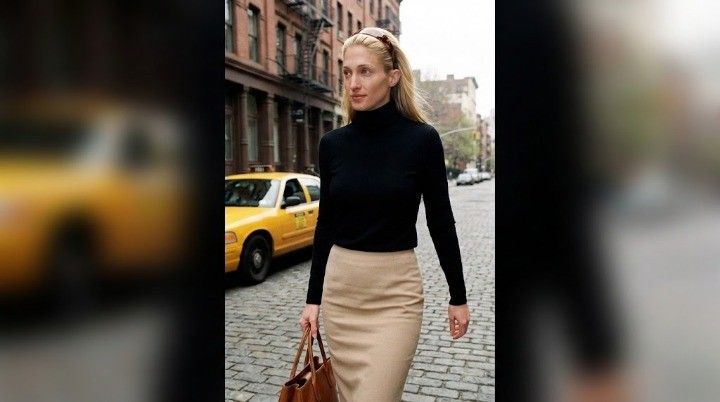
The February 2026 premiere of FX’s Love Story: John F. Kennedy Jr. & Carolyn Bessette has reignited a global conversation. For a new generation, Carolyn Bessette Kennedy is the ultimate “clean girl” aesthetic muse—a figure whose beige pencil skirts and tortoiseshell headbands dominate TikTok mood boards. For historians and those who lived through the 1990s, she remains an enigma defined by a tragic end.
But the dramatization often blurs the reality. Was she simply a reluctant wife hiding in a Tribeca loft, or was she a sharp, career-driven executive who shaped one of America’s biggest fashion houses?
This article separates the script from the source material. We analyze her verifiable career path, deconstruct the architecture of her enduring style, and look at the hard evidence from the 1999 NTSB investigation.
Beyond the “Kennedy Wife”: The Professional Rise of Carolyn Bessette
Before the paparazzi lenses focused on her, Carolyn Bessette was a force in the competitive world of Manhattan public relations. Reducing her narrative to her marriage ignores a decade of professional climb that verifies her expertise in brand management and trend forecasting.
From Sales Floor to Director: The Calvin Klein Years
Carolyn’s career trajectory is a textbook example of retail-to-corporate ascension. After graduating from Boston University in 1988 with a degree in Elementary Education, she didn’t step into a boardroom. She started on the sales floor at the Calvin Klein store in Chestnut Hill, Massachusetts.
Her innate understanding of the brand’s minimalist ethos caught the attention of traveling executives. Susan Sokol, a Calvin Klein executive, notably tapped her for a role in New York City. By the early 90s, Bessette wasn’t just working for the brand; she was defining it.
She climbed the ladder to become the Director of Publicity for Calvin Klein’s flagship Manhattan office. This was not a ceremonial role. She worked directly with show producers and editors, managing the high-stakes optics of one of the decade’s most controversial and successful fashion houses.
Industry Context: The early 90s at Calvin Klein were defined by the shift from 80s excess to 90s grunge and minimalism. Carolyn stood at the center of this cultural pivot, acting as both a face of the brand and a strategist behind the scenes.
Managing the A-List: PR Strategy for Diane Sawyer & Annette Bening
Her role required navigating the egos and demands of Hollywood’s elite. Verified reports and biographies, including the 2024 comprehensive work by Elizabeth Beller, detail her work with high-profile clients like Annette Bening and Diane Sawyer.
She didn’t just dress them; she managed their public image in relation to the brand. This required a skill set that the Love Story series often glosses over: crisis management, media literacy, and high-level negotiation.
-
The Skill Set: She understood “imaging”—the art of aligning a celebrity’s personal brand with a corporate identity.
-
The Execution: She was known for her ability to handle difficult personalities with a mix of charm and steel, a trait that would later help her navigate the Kennedy press machine, albeit with more difficulty.
Defining 90s Minimalism: The Architecture of Her Style
Why does a woman who died over 25 years ago still dictate how Gen Z dresses in 2026? The answer lies in the “architecture” of her wardrobe. Carolyn Bessette Kennedy didn’t follow trends; she built a uniform.
Fashion historians and stylists often refer to her approach as “subtractive fashion.” If an outfit felt cluttered, she removed an item. This discipline is what separates her look from generic 90s nostalgia.
The Narciso Rodriguez Wedding Gown: A Shift in Bridal History
On September 21, 1996, on Cumberland Island, Georgia, Carolyn changed the wedding industry instantly. At a time when bridal fashion was dominated by Diana-esque volume, lace, and excessive beadwork, she chose a pearl-white silk crêpe floor-length gown.
The designer was Narciso Rodriguez, then a relatively unknown talent who had worked at Calvin Klein.
The Design Breakdown:
-
Fabric: Bias-cut silk crêpe that skimmed the body rather than cinched it.
-
Silhouette: A simple slip dress structure with a cowl neckline.
-
Impact: It launched Rodriguez’s career and established the “anti-bride” aesthetic.
[See our analysis of Iconic 90s Wedding Dresses]
According to Vogue archives, the dress was so deceptively simple that it confused some press members at the time, yet it remains one of the most copied silhouettes in bridal history. It signaled a move toward “intellectual luxury”—expensive, well-made, but quiet.
“Quiet Luxury” in 2026: Why the CBK Aesthetic is Back
The current resurgence of the “Clean Girl” aesthetic and “Quiet Luxury” is a direct lineage of Carolyn’s wardrobe. Her style relied on a capsule of high-quality staples that could be remixed indefinitely.
If you are trying to replicate this look, you need to focus on three specific elements that defined her public appearances:
-
The Yohji Yamamoto Menswear Influence: She frequently wore a white Yohji Yamamoto men’s dress shirt, wrapped and tucked to create a feminine shape. This juxtaposition of masculine tailoring with feminine accessories (like a headband or red lip) was her signature.
-
The Accessories: She rarely wore jewelry. Instead, her “accessories” were functional:
-
Selima Optique oval sunglasses.
-
A tortoiseshell headband (often from a drugstore).
-
The Prada 1995 re-edition bag (which she helped make famous).
-
-
The Palette: Black, beige, white, camel, and denim. She rarely wore patterns.
SME Insight: The genius of her style was the “high-low” mix before it was a marketing term. She wore Levi’s 501s with a $2,000 coat. The lesson here is fit over label. She tailored her jeans to hit exactly at the ankle bone, elongating her leg—a trick stylists still use today.
Fact vs. Fiction: FX’s Love Story (2026) Breakdown
The 2026 FX anthology series has introduced Carolyn Bessette Kennedy to millions of new viewers. However, television demands conflict, and conflict often requires creative license. Here, we fact-check key plot points against biographical records and witness accounts.
The Central Park Meeting vs. The Showroom Reality
The Show’s Version: Many dramatizations depict a “meet-cute” while jogging in Central Park, emphasizing a cinematic destiny. The Verified Fact: While they both jogged in the city, their professional circles overlapped. Kennedy met her in the Calvin Klein showroom (or a related industry event depending on the source) while she was working. He was the pursuer; she was initially hesitant to date him specifically because of the fame he carried.
Paparazzi Pressure: Was the Tribeca “Hounding” Dramatized?
The Show’s Version: The series depicts a claustrophobic existence in their Tribeca loft at 20 North Moore Street, with photographers swarming the door. The Verified Fact: This is accurate. The level of surveillance Carolyn faced was unprecedented for a private citizen. Unlike Jackie Kennedy, who had Secret Service protection, Carolyn had none.
Video archives from the late 90s show photographers physically blocking her path, shouting insults to provoke a reaction (“Carolyn, look here! Why do you look so sad?”). In one verified incident, she famously confronted them on the sidewalk, not with anger, but with a plea for space—a moment often cited to show her vulnerability.
Reality Check: The scene where she refuses to leave the apartment for days is corroborated by friends who stated she felt “hunted.” This was not a plot device; it was her daily reality in 1998 and 1999.
The 1999 Plane Crash: What the NTSB Records Actually Say
The tragedy of July 16, 1999, is often clouded by conspiracy theories and tabloid speculation. To understand what happened, we must look strictly at the National Transportation Safety Board (NTSB) report.
Carolyn Bessette Kennedy, her sister Lauren Bessette, and John F. Kennedy Jr. departed from Essex County Airport in New Jersey, headed for Martha’s Vineyard. They never arrived.
Spatial Disorientation: The Technical Cause
The official NTSB report (Identification: NYC99MA178) provides a clear, technical explanation for the crash. It rules out mechanical failure or sabotage.
The cause was determined to be “The pilot’s failure to maintain control of the airplane during a descent over water at night, which was a result of spatial disorientation.”
The Key Factors:
-
The Haze: The weather report indicated “hazy” conditions. While legal for VFR (Visual Flight Rules), the lack of a visible horizon over the ocean created a “black hole” effect.
-
Pilot Experience: JFK Jr. did not hold an instrument rating. He was certified only for visual flight. When he lost sight of the horizon, his inner ear likely tricked him into believing the plane was level when it was actually banking.
-
The Spiral: Radar data showed the Piper Saratoga entered a “graveyard spiral”—a rapid, disorienting descent that is nearly impossible for a non-instrument-rated pilot to recover from without visual references.
The Lost Legacy of Lauren Bessette
Often omitted from the headlines is Lauren Bessette, Carolyn’s older sister, who was also on the plane. A successful investment banker at Morgan Stanley, Lauren was merely catching a ride to Martha’s Vineyard. Her death compounded the tragedy for the Bessette family, who lost two daughters that night.
The media focus on the “Kennedy Curse” frequently overshadowed the loss of the Bessette women, a point that modern biographers and the 2026 series attempt to rectify.
The Cultural Endurance of Carolyn Bessette Kennedy
Twenty-seven years after her death, Carolyn Bessette Kennedy remains a singular figure in American culture. She represents a bridge between the analog and digital worlds—a woman who never had an Instagram account yet curated an image more powerful than most modern influencers.
Her legacy is dual-layered. On one side, she is the fashion saint of the 1990s, the woman who made a simple white shirt look like couture. On the other, she is a cautionary tale about the voracious appetite of celebrity culture.
She did not seek the spotlight, but she navigated it with a distinct, quiet dignity. Her true “Experience” wasn’t just in her wardrobe; it was in her attempt to maintain a private identity within a public dynasty—a struggle that resonates more in the 2026 social media age than it did in 1999.
FAQs
What did Carolyn Bessette Kennedy do for a living?
Before her marriage, she was a high-level fashion publicist. She served as the Director of Publicity for Calvin Klein in New York City, where she managed celebrity clients and show production.
How did John F. Kennedy Jr. and Carolyn Bessette meet?
While rumors often cite a meeting in Central Park, reliable sources and biographies indicate they met through professional circles, specifically at the Calvin Klein showroom where Carolyn worked.
Who designed Carolyn Bessette Kennedy’s wedding dress?
Her iconic 1996 wedding dress was designed by Narciso Rodriguez. It was a bias-cut silk crêpe slip dress that launched Rodriguez’s career and changed 90s bridal fashion.
Was the FX series Love Story based on a true story?
Yes, the 2026 series is based on historical events and heavily references Elizabeth Beller’s biography, Once Upon a Time: The Captivating Life of Carolyn Bessette-Kennedy. However, some scenes are dramatized for narrative effect.
What happened to Carolyn Bessette’s sister, Lauren?
Lauren Bessette was also a passenger on the Piper Saratoga on July 16, 1999. She died alongside Carolyn and JFK Jr. when the plane crashed near Martha’s Vineyard.
Did Carolyn Bessette Kennedy have children?
No, Carolyn and John F. Kennedy Jr. did not have any children at the time of their deaths.
Where did Carolyn and JFK Jr. live in New York?
They lived in a loft at 20 North Moore Street in the Tribeca neighborhood of Manhattan. The building became a focal point for paparazzi during their marriage.