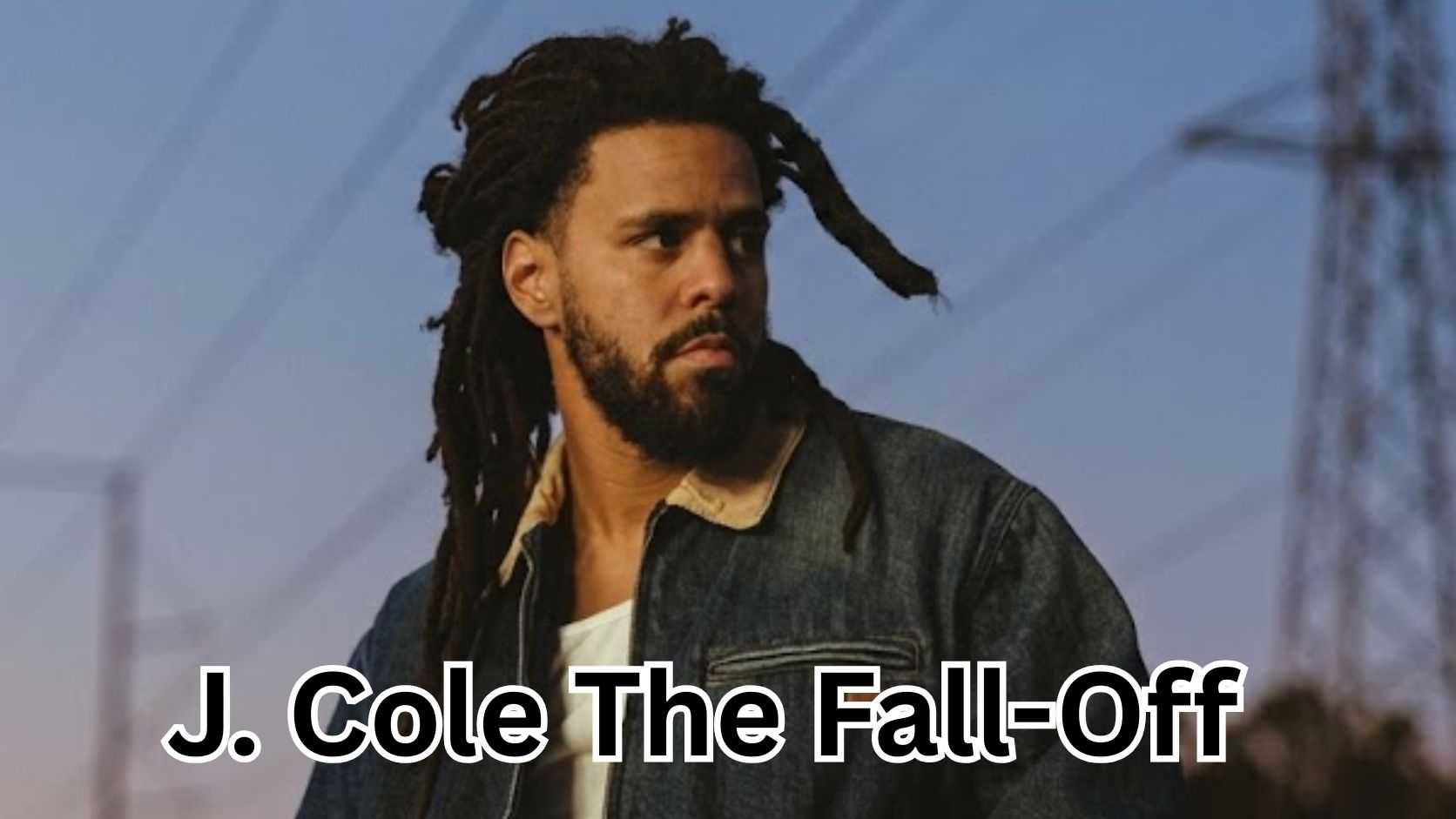
On February 6, 2026, the hip-hop world didn’t just stop; it exhaled. After eight years of cryptic teases dating back to the final track of KOD, Jermaine Cole has finally delivered his seventh, and potentially final, studio album. J. Cole The Fall-Off isn’t just a collection of songs. It is a dense, double-disc architectural feat that forces listeners to confront the passage of time.
For nearly a decade, fans speculated about this project. Would it be a mixtape? A compilation? The reality is far more ambitious. Cole has given us a “time-travel” narrative split into two distinct halves: Disc 29 and Disc 39.
This guide breaks down the complex production, the confirmed tracklist, and the narrative threads that tie this massive project together. If you want to understand why this album is already being hailed as a modern classic, you need to understand the duality at its core.
The Concept: Disc 29 vs. Disc 39 Explained
Most double albums suffer from bloat. Cole avoids this by treating the two discs as separate psychological profiles. The structure relies on a specific narrative device: a 39-year-old Cole revisiting his 29-year-old self.
Disc 29: The Hungry Return to Fayetteville
Disc 29 represents the hunger of the 2014 Forest Hills Drive era. The production here is gritty, relying heavily on soul samples and boom-bap percussion that defined his early mixtape days.
SME Perspective: The Narrative Thread As a long-time listener who still keeps The Come Up in rotation, the parallels here are undeniable. On the opening track of Disc 29, Cole samples the same distinct “Simba” roar he used in 2007. This isn’t lazy recycling; it’s a deliberate signal. He is telling us, “I am putting myself back in that basement.” Listening to Disc 29 feels like unearthing a lost hard drive from 2014—the flows are faster, the hunger is palpable, and the subject matter revolves around proving he is the best rapper alive.
Disc 39: Peace, Family, and Retirement
If Disc 29 is the climb, Disc 39 is the view from the summit. This half of J. Cole The Fall-Off shifts sonic gears entirely. The aggressive 808s serve as a backdrop for live instrumentation, lush chords, and slower tempos.
Here, Cole isn’t rapping to prove he’s the best; he’s rapping to explain why he’s leaving. The content shifts from lyrical exercises to discussions on fatherhood, the music industry’s toxicity, and his desire for anonymity.
The Fall-Off Full Tracklist & Featured Artists
The project boasts 24 tracks, a massive serving for an artist known for “going platinum with no features.” However, for his final bow, Cole opened the doors to Dreamville and beyond.
The Surprise Guests: From Burna Boy to Erykah Badu
While verified data on the full production credits is still populating on Genius and Wikipedia, the confirmed features listed on [Apple Music] paint a picture of global collaboration:
-
Burna Boy & Tems: Featured on “Lagos to NC,” bridging the gap between Afro-fusion and Southern rap.
-
Future: appearing on “Trapped in the trap,” providing a melodic hook that contrasts Cole’s sharp verses.
-
Erykah Badu: The soul legend provides the outro vocals on “Mother’s Garden,” a spiritual successor to “Window Pain.”
-
Petey Pablo: A nod to North Carolina heritage, appearing on the high-energy anthem “Raise Up (Reprise).”
-
Westside Gunn: brings the Griselda grit to “Concrete Rose,” a track that feels like a pure lyrical spar.
“The Fall-Off Is Inevitable”: Analyzing the Reverse Storytelling
One track demanding specific attention is the lead single, “The Fall-Off Is Inevitable.” According to a 2026 interview with [Complex], Cole wrote this track in a 12-hour fugue state.
The song employs a reverse storytelling technique similar to Nas’s “Rewind.” Cole starts the verse describing his retirement party and works backward to his first rhyme written at age 15. It is a technical masterclass that serves as the thesis statement for the entire album: you cannot stop the fall-off, you can only control how you land.
Decoding the Artwork: A 15-Year-Old’s Vision
The album cover art for J. Cole The Fall-Off is starkly different from The Off-Season. Gone are the basketball hoops and burning backgrounds. Instead, we see a simple, grainy photo of a messy bedroom.
This is a recreation of Cole’s actual childhood room at 2014 Forest Hills Drive. The posters on the wall—Eminem, 2Pac, 50 Cent—are period-accurate. By framing his final album with the imagery of his beginning, Cole reinforces the “full circle” theme. He isn’t leaving the game as a superstar; he’s leaving it by returning to the fan he used to be.
The “7 Minute Drill” Aftermath: Addressing the Kendrick Lamar Apology
You cannot discuss this album without addressing the elephant in the room. The hip-hop community is still debating the 2024 apology to Kendrick Lamar. Does J. Cole The Fall-Off address it?
Yes, and with surprising candor.
On the track “Glass House,” Cole doesn’t offer excuses. Instead, he doubles down on his stance that peace is more valuable than rap beef. He frames the apology not as a moment of weakness, but as the moment he truly “fell off” the pedestal of public expectation and landed on his own moral ground.
This connects directly to the Birthday Blizzard ’26 EP released in January. Those freestyle tracks were the warm-up, testing the waters of vulnerability. The Fall-Off is the deep dive. He argues that the “Fall-Off” isn’t a loss of skill, but a shedding of ego.
Is This Really J. Cole’s Last Album?
J. Cole has teased retirement before. The “Fall-Off Era” has been running since 2018. However, the tone of this project feels final.
In the liner notes, Cole thanks his fans for “the 20-year shift.” The song “Ocean Way” ends with the sound of a studio door closing and a car driving away—a literal sonic exit.
While artists like Jay-Z have proven retirement is often temporary, Cole’s move to professional basketball and his focus on the Dreamville executive role suggests he is serious. He may drop features or mixtapes, but as a cohesive studio album artist, this appears to be the end of the road.
Final Verdict: A graceful landing
J. Cole The Fall-Off is a dense, rewarding listen that refuses to cater to TikTok trends or streaming algorithms. It is a rap album for people who love rap albums.
By splitting his psyche into Disc 29 and Disc 39, Cole managed to satisfy the fans who miss the “mixtape Cole” while staying true to the man he has become. It is a rare “retirement” album that doesn’t feel like a funeral; it feels like a graduation.
Our Rating: 4.8/5 Best Tracks: “The Fall-Off Is Inevitable,” “Hunger on Hillside II,” “Lagos to NC.”
Which side of the album resonates more with you? The hunger of Disc 29 or the wisdom of Disc 39? Let us know in the comments below.
FAQ
1. When did J. Cole release The Fall-Off?
J. Cole officially released The Fall-Off on February 6, 2026, across all major streaming platforms including [Spotify] and [Apple Music].
2. How many tracks are on The Fall-Off?
The album is a double-disc project featuring a total of 24 tracks, split evenly between Disc 29 and Disc 39.
3. Is The Fall-Off really J. Cole’s final album?
Cole has heavily implied this is his final studio album, positioning it as the conclusion to “The Fall-Off Era” he began teasing in 2018. However, he has not ruled out guest features or compilation projects with Dreamville.
4. Who produced The Fall-Off?
The album was executive produced by J. Cole, Ibrahim “Ib” Hamad, and T-Minus. Additional production credits include The Alchemist and heavy involvement from Dreamville in-house producers.
5. What is the difference between Disc 29 and Disc 39?
Disc 29 explores Cole’s mindset at age 29, focusing on hunger, competition, and establishing dominance. Disc 39 reflects his current perspective at age 39, focusing on peace, fatherhood, and his exit from the industry.
6. Who are the features on The Fall-Off?
Confirmed guest appearances include Future, Burna Boy, Tems, Erykah Badu, Petey Pablo, and Westside Gunn.
7. Is “Middle Child” on The Fall-Off?
No. Although “Middle Child” was released during the build-up to this era, it remains a standalone single and is not included on the final 24-track listing.