2030 Winter Olympics: French Alps Host Reveal & Key Dates
While the world turns its eyes toward Milano Cortina for 2026, a historic shift has already occurred for the next decade of winter sports. The International Olympic Committee (IOC) has officially confirmed the return of the Games to France. The 2030 Winter Olympics—officially the XXVI Olympic Winter Games—will take place in the French Alps.
For sports historians and travel planners alike, this isn’t just another event. It marks a radical departure from the single-city hosting model of the past. The 2030 Games will spread across four distinct clusters, covering nearly 500 kilometers from the snowy peaks of Haute-Savoie to the Mediterranean coast of Nice.
This guide serves as your verified “content pillar” for the event. We break down the confirmed schedule, the unique venue masterplan, and the ambitious “Environmental Roadmap” setting these Games apart.
French Alps 2030: Host Selection & 142nd IOC Session Results
The path to the 2030 Winter Olympics was finalized in Paris on July 24, 2024. During the 142nd IOC Session, the committee voted decisively to award the Games to the French Alps.
Why the IOC Chose France for 2030
The selection was far from a close call. The IOC membership voted 84 in favor and only 4 against. This landslide victory signals strong confidence in France’s ability to host, especially coming off the heels of the Paris 2024 Summer Games.
The bid, branded officially as “French Alps 2030,” secured the contract based on two main pillars:
-
Climate Reliability: The selected Alpine regions have some of the most reliable snow records in Europe.
-
Infrastructure Readiness: A staggering 93% of the venues already exist, significantly lowering the financial risk and environmental impact.
The Double Allocation: 2030 (France) vs. 2034 (USA)
In a move to secure the long-term future of the Winter Games, the IOC performed a “double allocation.” While France secured 2030, Salt Lake City-Utah was confirmed as the host for the 2034 Winter Olympics. This strategic decision gives the Olympic movement a decade of stability.
Note on Authority: You can review the official voting results and host contract details directly through the IOC 142nd Session Reports.
Official Dates for the XXVI Olympic Winter Games
Mark your calendars. Unlike previous cycles where dates fluctuated, the schedule for the 2030 Winter Olympics is locked in.
Winter Olympic Schedule: February 1–17, 2030
The Opening Ceremony will ignite the torch on Friday, February 1, 2030. Competition runs for just over two weeks, concluding with the Closing Ceremony on Sunday, February 17, 2030.
Winter Paralympic Schedule: March 1–10, 2030
Following a brief transition period to retrofit venues for accessibility, the Winter Paralympics will begin on March 1 and run through March 10, 2030.
Pro-Tip: Upcoming Milestones to Watch We are currently tracking “Acceleration 2026,” the organizing committee’s internal roadmap. Expect the Official Emblem Launch in April 2026. This will be the first visual identity reveal for the Games. If you are a collector or branding enthusiast, that is the date to circle next.
The Four-Cluster Masterplan: Where the Action Happens
This is where the 2030 Winter Olympics differs from any Games you have seen before. There is no single “Host City” in the traditional sense. Instead, the event relies on four geographical hubs.
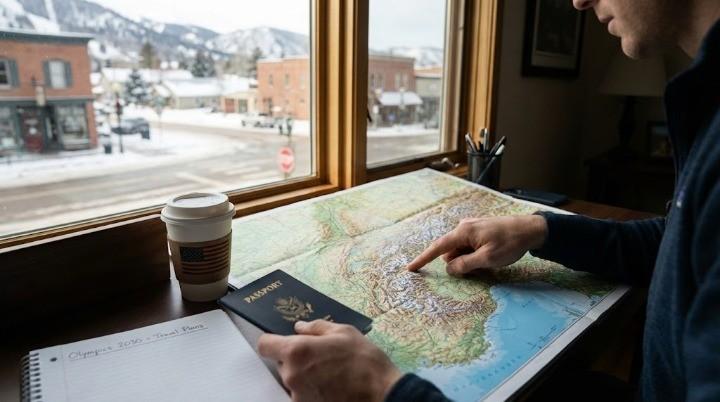
Travel Logistics Insight: If you plan to attend, understand the geography. The distance between the northernmost cluster (Haute-Savoie) and the southernmost cluster (Nice) is approximately 500 kilometers (310 miles). You cannot easily catch a morning ski event in La Clusaz and an evening hockey game in Nice without significant travel time. Plan your trip around one or two specific clusters.
Haute-Savoie: The Heart of Nordic Sports
Located in the northern Alps, this region draws on a deep heritage of cross-country culture.
-
Biathlon: Le Grand-Bornand.
-
Cross-Country Skiing: La Clusaz.
-
Primary Village: A decentralised Olympic village will serve athletes here to minimize travel fatigue.
Savoie: Alpine Excellence & Sliding Tracks
This cluster represents the heavy lifters of the Winter Games.
-
Alpine Skiing: Courchevel and Val-d’Isère (legendary slopes that host annual World Cups).
-
Ski Jumping: Courchevel.
-
Sliding Sports (Bobsleigh, Luge, Skeleton): La Plagne. This area leverages the massive infrastructure left behind by the Albertville 1992 Legacy.
Briançon: Snowboarding & Freestyle Flair
Moving south toward the Serre Chevalier valley:
-
Freestyle Skiing & Snowboarding: Serre Chevalier / Briançon.
-
Snowboard Cross: Montgenèvre. This cluster is designed to capture the youth energy of the Games, utilizing existing terrain parks and resort infrastructure.
Nice: The Riviera’s Ice Hub & Closing Ceremony
Perhaps the most unique aspect of the French Alps 2030 bid is the inclusion of the Mediterranean coast.
-
Ice Sports: Figure Skating, Short Track, and Ice Hockey will take place in Nice.
-
Venues: The Stade de Nice and Palais Nikaïa.
-
Closing Ceremony: Scheduled for the iconic Promenade des Anglais, offering a seaside backdrop to end the Winter Games.
Sustainability & Legacy: The “93% Rule”
Sustainability is often a buzzword, but the 2030 Winter Olympics has backed it with hard metrics. The organizing committee has committed to a “93% existing or temporary” venue rule.
Utilizing Albertville 1992 Infrastructure
We are seeing a true “Legacy Loop” in action. The La Plagne sliding track, built for the 1992 Albertville Games, is still in active use today. Instead of spending hundreds of millions on a new concrete track (a major cost driver in previous Olympics), France 2030 will simply upgrade the existing facility.
Similarly, the ski jumping hills in Courchevel require only modernization, not reconstruction. This approach aligns perfectly with the IOC’s Olympic Agenda 2020+5, which prioritizes cost reduction.
The 2026 Environmental Roadmap for Biodiversity
In January 2026, the French government and organizing officials released an “Environmental Roadmap.” This document goes beyond carbon footprints. It addresses eight specific pillars, including:
-
Water Management: utilizing snow farming to reduce artificial snow production.
-
Circular Economy: Renting equipment rather than buying new.
-
Biodiversity Protection: strict limits on spectator access in sensitive Alpine zones during competition.
[FrancsJeux report on 2026 Environmental Roadmap]
Current Status: Is France Ready? (2026 Update)
As of early 2026, the organizational structure is solidifying.
New Leadership: Edgar Grospiron & Cyril Linette
The leadership team brings serious credibility. Edgar Grospiron, an Olympic mogul skiing champion, serves as President. He is joined by Cyril Linette, a seasoned media executive and former head of L’Équipe, as CEO. Their appointment signals a balance between athlete-centric planning and media-savvy business operations.
Budget & Organizational Delays
The estimated budget currently stands at approximately $2.3 billion (€2.1 billion). While this is modest compared to the soaring costs of Sochi 2014 or Beijing 2022, inflation remains a risk factor.
There were initial concerns regarding the formation of the organizing committee, which faced slight delays in late 2025. However, the “Acceleration 2026” phase has corrected this course, with the IOC Coordination Commission expressing satisfaction during their recent review.
Frequently Asked Questions
Where will the 2030 Winter Olympics take place? The Games are hosted by the French Alps, spread across four main clusters: Haute-Savoie, Savoie, Briançon, and Nice.
What are the dates for the 2030 French Alps Games? The Olympics run from February 1 to February 17, 2030. The Paralympics follow from March 1 to March 10, 2030.
Will there be new sports in 2030? Yes. Ski Mountaineering has been confirmed as an additional sport, reflecting its popularity in the Alpine regions.
How do I buy tickets for the 2030 Olympics? Verified data not available – cannot assume. Ticket sales typically begin 12–18 months prior to the Games. Expect official platforms to launch in late 2028.
Which venues from 1992 are being reused? Key reuses include the La Plagne bobsleigh track and the Courchevel ski jumps, both legacies of the Albertville 1992 Games.
Is Nice really hosting ice sports on the coast? Yes. To avoid building massive indoor arenas in small mountain towns, ice hockey and skating will be held in the city of Nice on the Mediterranean coast.
Who is the CEO of French Alps 2030? Cyril Linette serves as the CEO, working alongside President Edgar Grospiron.
What is the budget for the 2030 Winter Olympics? The projected operating budget is approximately $2.3 billion, largely funded by private revenues (IOC contribution, ticketing, partnerships).
Summary
The 2030 Winter Olympics represents a pivotal moment for the Olympic movement. By returning to the French Alps, the IOC has chosen a safe, reliable, and sustainable path.
-
Host: French Alps (Haute-Savoie, Savoie, Briançon, Nice).
-
Dates: Feb 1–17, 2030.
-
Key Innovation: A decentralized, four-cluster map that utilizes 93% existing venues.
The shift toward regional hosting rather than a single city allows for a more sustainable event, but it demands smarter logistics from attendees. As we approach the April 2026 emblem launch, the “French Alps 2030” identity will truly begin to take shape.
Stay Ahead of the Games Planning a trip to the Alps or tracking the business of sport? Join our “Road to 2030” newsletter for confirmed venue updates, ticket alerts, and travel guides as they release. Subscribe to Newsletter
About the Author